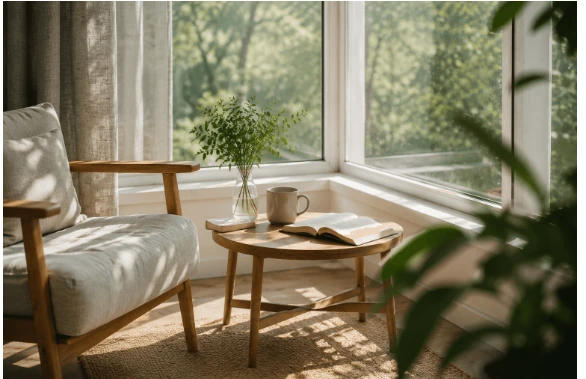
Every morning while my coffee brews, I sit for five minutes and do nothing. It started as a way to drink it before it went cold. At some point, that stretch became the clearest five minutes of my whole day. Every time I see advice like “meditate for 30 minutes” or “start a yoga routine,” I have the same thought: if I had that kind of time to spare, stress wouldn’t be piling up in the first place. So I mapped out the 5-minute stress habits I actually keep, along with what the evidence says about why each one works, or doesn’t.
Why Stress Hits Different in Midlife
I hear a lot that hormone shifts around menopause make women more sensitive to stress. The research doesn’t back that up as cleanly as the conventional wisdom suggests. Cortisol doesn’t rise the same way in everyone, and in people with long-term stress exposure, the response can actually go flat instead of spiking. One study found that women with more frequent, more severe hot flashes had a lower rise in cortisol right after waking, not a higher one, and other research on the topic has landed on both sides. “Menopause makes you more fragile to stress” is too simple a story.
What changes more, in my experience, is the pile-up. Sleep gets worse. The list of people depending on me gets longer. The habits I used to lean on to blow off steam, staying out late, exercising in long bursts, stopped matching my energy. Stress itself didn’t get stronger. I just have less capacity left to absorb it.
I unpacked this more in why midlife stress feels different.
Morning: 5 Minutes Alone with My Coffee
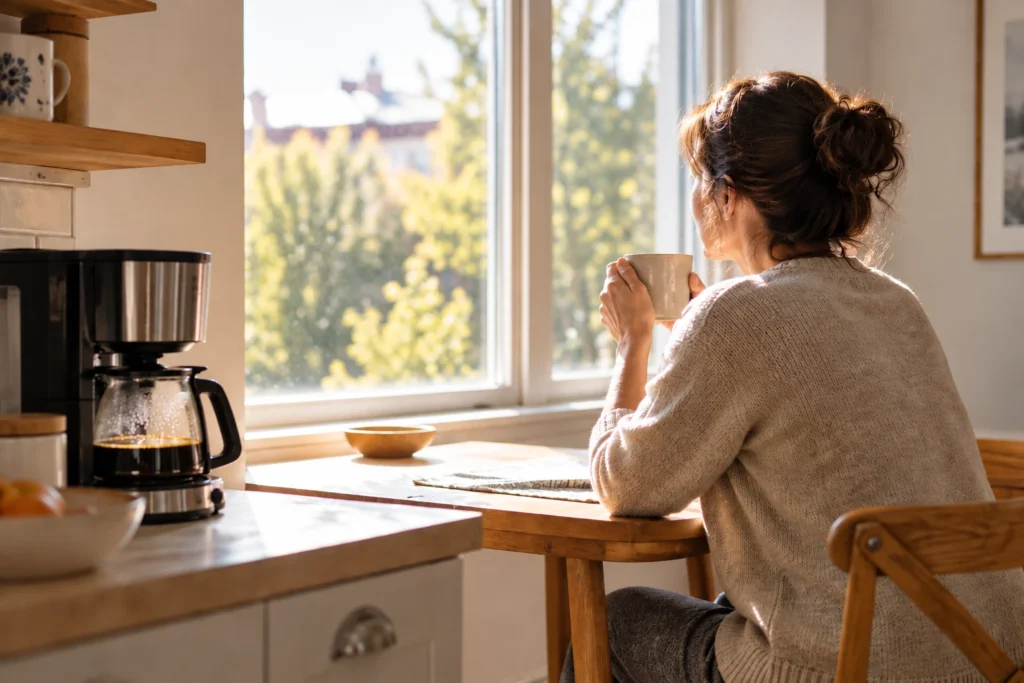
The one habit I actually do without fail: while the coffee brews, I don’t check my phone. I just sit. I thought this was nothing for a long time, then noticed how different my mornings felt on the days I skipped it.
The moment I open notifications, email, or news first thing, my brain starts the day already in reaction mode. A few unstimulated minutes seems to push that shift back, at least a little. That’s my read on it, based on how it feels, not a claim backed by a study on this exact routine. I’d rather not oversell it.
Lunchtime: A 5-Minute Walk (and a Breathing Trick)
I walk for about five minutes after lunch, usually just a loop near the office. I started because sitting through the whole afternoon made me feel sluggish.
Short walks do lift mood, but the boost is brief — it tends to fade back toward baseline within roughly half an hour, not cure a stressful afternoon. Think of it as breaking up the sitting, not fixing anything.
Breathing exercises aren’t something I do on purpose, but the evidence is stronger than I expected. A meta-analysis of 12 randomized trials, 785 people total, found breathwork groups reported small-to-medium reductions in subjective stress compared to controls. You don’t need to hold your breath or gasp for air. Breathing in through your nose and making the exhale a little longer than the inhale is enough to try.
After Work: Building a Transition
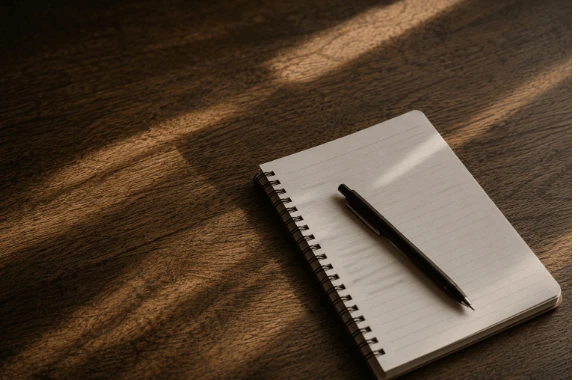
The first thing I do when I get home is shower. It’s less about being clean and more a switch from “work mode” to “home mode.” I try not to look at my phone before bed, though I don’t always manage it, and some nights I write down one thing that went okay that day.
What surprised me, looking into this occasional journaling, is that it doesn’t need to be a daily, detailed ritual to help. A meta-analysis of 27 gratitude-intervention trials found modest reductions in anxiety and depression symptoms, and separate reviews have found small gains in life satisfaction from similar interventions. The effects aren’t large, and studies vary enough in method that certainty is still low. I wouldn’t push someone who finds writing stressful to force it.
The no-phone-before-bed habit actually started because of sleep problems, not stress. I wrote more about that in my piece on building a better bedtime routine.
Why 5-Minute Stress Habits Beat Perfect Routines
You’ve probably heard that a new habit takes 21 days to stick. That number is too short to hold up. A 2024 meta-analysis of 20 studies covering 2,601 people found the median time to form a habit was 59 to 66 days, with the average landing between 106 and 154 days. Individual variation was wide: as little as 4 days, as long as 335.
The more interesting finding wasn’t the timeline. Habits people chose for themselves, habits that were easy to repeat, and habits done in the morning stuck better than the rest. “Repeat what you picked, most days” mattered more than “do it perfectly, every day.” Judged by that standard, journaling only some nights isn’t really a problem.
What Didn’t Work for Me: Meditation
I tried meditation for a while, guided app and all. But the more I tried to sit still and empty my mind, the more my to-do list crowded in, and I ended up more restless, not less. I quit after a few weeks.
That doesn’t mean meditation doesn’t work. It just didn’t work for me, and that’s a common enough reaction. If sitting still itself feels uncomfortable, something that uses your hands or your legs, walking, short journaling, might fit better than stillness.
Common Questions
Do 5-minute stress habits actually work, or do I need 30 minutes to see results?
Small, consistent habits can move the needle, though not the same way a longer practice like structured meditation or therapy would. The breathing research above showed real, if modest, reductions in subjective stress from a few minutes of practice. Five minutes isn’t a shortcut to the same outcome as 30 — it’s a smaller, different tool, and one you’re actually likely to keep using.
Is a 5-minute walk really enough to lower stress?
It helps in the moment. Mood improvements from a short walk are real but short-lived, fading back toward baseline within roughly half an hour. Use it to break up a stretch of sitting, not as a stand-alone stress treatment.
How long before a new stress habit actually sticks?
Longer than the “21 days” myth suggests. Research puts the median around 59 to 66 days, with a wide range depending on the person and the habit. Habits you choose yourself, and do in the morning, tend to stick faster.
What if meditation doesn’t work for me?
It’s a common reaction, not a personal failure. If stillness makes you more anxious rather than less, habits that involve movement or writing, walking, short journaling, tend to be a better starting point.
Coffee for five minutes, a walk after lunch, a shower, a phone-free hour before bed. Listed out, it looks like nothing much. After a few years of this, though, I’ve learned that this is exactly the amount that survives a bad week. Skip a 30-minute meditation practice, and guilt tends to follow. Skip one of these, and I just pick it back up the next day.
Looking into the research mostly confirmed what I’d already guessed: small, repeatable 5-minute stress habits outlast ambitious ones. If you’re not sure where to start, the easiest move is adding a few minutes to something you’re already doing, drinking coffee, eating lunch, rather than carving out something new.
Keep Reading
If you’re curious what else is behind why this stage of life feels harder to manage, Constantly Overwhelmed and Irritable? 4 Reasons Midlife Stress Feels Harder digs into it.
Wondering whether a supplement could help on the harder days? Supplements for Mood: What Actually Helps—and What Doesn’t walks through what the evidence actually supports.
This article is based on personal experience and publicly available research. It is not a substitute for medical diagnosis or treatment. Please consult a healthcare professional about any health concern or medication.