
The other week I caught myself leaning on the horn at a car that hadn’t done anything wrong. Two days later my teenage son said something completely ordinary and I heard it as a challenge. Things I would have let slide a few years ago were landing differently.
My first explanation was the easy one: I’m getting older, I have less patience. The longer I sat with it, the less that held up. Midlife stress doesn’t seem to be a patience problem. It feels more like several things stacking up at the same time.
What follows is what that stacking actually consists of, based on what the research supports and where it stays uncertain. Four threads: accumulated stress burden, hormonal change, sleep and recovery, and a stretch of life where responsibilities can pile up.
1. Cumulative Stress and Allostatic Load
The first thread has a name that sounds like jargon: allostatic load. The idea underneath is simpler than the term.
The body has a stress response system. A deadline, a near-miss on the road, a difficult conversation: heart rate climbs, cortisol rises, muscles tighten. The system switches on, deals with the situation, and switches off again. Nothing about that cycle is harmful.
The problem shows up when the switch stays on too often, for too long. Pull one late night to finish something urgent, and two good nights of sleep will square it. Keep that pace for a year, though, and the tiredness stops responding to a weekend lie-in.
Allostatic load is the name for that second scenario. It describes the wear that builds across body systems when the stress response keeps switching on without enough recovery in between.
One caution here, because it shapes how the rest of this reads. Allostatic load is a framework for thinking about accumulated burden, and no more than that. Nothing in it says stress tolerance falls off a cliff at 45.
If anything it suggests the opposite. The amount of stress arriving may be much the same as always, while the amount already sitting underneath it has quietly grown.
2. Hormonal Changes During the Menopause Transition
The second thread is hormonal, and a familiar one. During perimenopause, estrogen and other reproductive hormones stop following their old rhythm and start swinging more widely.
The Study of Women’s Health Across the Nation (SWAN) has tracked over 3,000 women since 1996. It found higher odds of depressive symptoms and anxiety in early perimenopause, late perimenopause and postmenopause than before the transition began. Both peaked in late perimenopause. Irritability, notably, was part of how anxiety was defined in the study.
So far this looks like a clean hormonal story. SWAN’s own data complicates it.
Stressful life events and low education carried more weight for depression than menopausal status did. For anxiety, once hot flashes and night sweats were factored in, menopausal stage barely mattered on its own. Even SWAN’s own summary called these mood shifts transient, shaped more by stress and sleep than by the transition itself.
That is a more useful conclusion than a simple one. Hormonal change during perimenopause can affect mood. It sits among several contributors, and treating a sudden rise in irritability as automatically hormonal closes off questions that are probably still open.
3. Sleep and Recovery May Not Work the Way They Used To
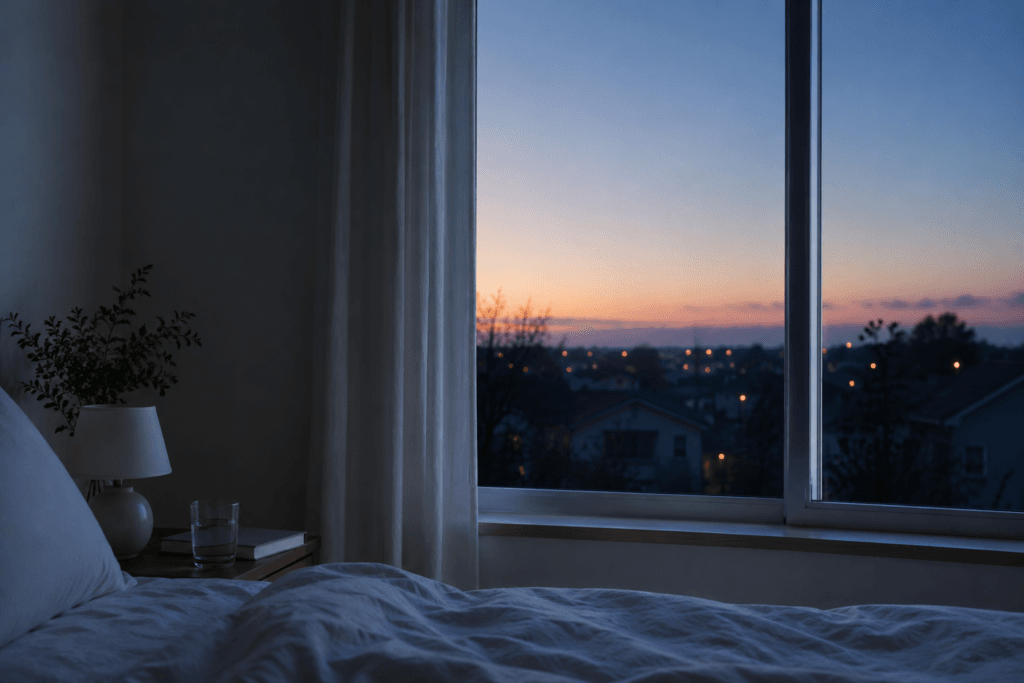
Stress and sleep run in both directions. High stress makes it harder to fall asleep and easier to wake during the night. A short night then makes mood harder to control the next day. Some of what feels like a shortening temper may turn out to be a sleep problem.
What SWAN found on sleep is less tidy than the surveys alone suggest.
Surveys say sleep gets worse around the transition. Tracked individually, though, only about 15% of women actually got worse; most stayed stable or followed an ordinary aging pattern.
The lab data add a twist. Some women whose hormones shifted fastest actually slept longer and more deeply by machine, while rating their own sleep worse. That’s a correlation, not proof that hormone changes improve sleep. Mostly it shows self-report and lab measurements don’t always agree, and “I slept badly” may describe something more than hours logged.
None of this makes the 3 a.m. wake-ups imaginary, or your own fault. It does mean “just fix your sleep” is too small an instruction to carry the whole problem. Sleep is one axis of the recovery system, and only one.
For the sleep side on its own terms, Sleep After 40: The Complete Guide to What Actually Helps goes considerably deeper.
4. Midlife Can Bring Overlapping Layers of Stress

The first three threads happen inside the body. This one happens around it.
Work and Career Pressure
For many people, work responsibility is at its heaviest in these years. Managing others. Owning outcomes. Rethinking a career direction that no longer fits.
Family and Caregiving
Some people are raising teenagers and helping aging parents in the same years. Household tension rarely stays at home. It becomes background load that quietly follows you everywhere.
Money, Education Costs, and Changing Relationships
Education costs and retirement planning can land in the same decade. Long-term relationships may be shifting at the same time. These things do not politely space themselves out.
What turns addition into compounding is recovery time. The demands go up. The space to absorb them goes down.
None of this is a rule; plenty of people carry none of it, and some carry more. But when several of these land at once, midlife is when it tends to happen.
What Does Midlife Stress Look Like?
So that is where it comes from. Here is how midlife stress tends to show up day to day:
- A sense of being constantly behind, with no obvious place to start
- A shorter fuse, where things that used to pass now trigger a reaction
- Restlessness or unease without a clear cause
- Flat mood and the feeling of having spent everything you had emotionally
One thing to be direct about: this is a list of symptoms, not a diagnosis. Sorting stress from something clinical is a conversation for a professional, not a self-check.
What Can Actually Help?
What follows starts with the basics and ends where outside help makes more sense than managing it yourself.
Start With the Basics That Support Recovery

Sleep, movement, regular meals, and actual recovery time. It reads like generic advice. It is also the layer everything else depends on.
Movement has the strongest evidence of the four. A 2023 umbrella review in the British Journal of Sports Medicine pooled 97 systematic reviews. Together they covered over a thousand trials and 128,000 people, and found medium-sized effects on depression, anxiety and psychological distress. Harder activity linked to bigger improvements.
The catch: 77 of those 97 reviews were rated low quality by the tool used to grade them, which is most of the evidence base. The direction of the finding holds up. The exact numbers are less solid than the sample size suggests.
Exercise earns its place on the list without being a settled question. For the fuller picture, Exercise After 40: What the Research Actually Says covers it.
The other three sit on thinner ground, and that’s easy to lose when all four get listed together. Sleep’s effect on next-day mood is well established in the lab, though trials testing it as a stress treatment are scarce. Regular meals and protected recovery time lean mostly on observation and clinical reasoning, not trials.
All three still belong in the answer. The confidence behind them just runs lower than the confidence behind movement. Any source that presents the four as equally proven is flattening something real.
Reduce the Stress You Can Actually Control
Some stress is fixed. A fair amount can be adjusted. Boundaries. Optional commitments you could turn down. Workload and expectations you could renegotiate. Standards that were never yours to begin with.
Separating the two matters. Effort spent on the fixed category usually creates more stress than it removes.
Build Small Stress-Relief Habits
Habits small enough to survive a bad week outlast ambitious ones. A five-minute practice done most days beats an hour-long routine abandoned by the third week. Stress-Relief Habits for Busy Midlife Days
Can Supplements Really Stabilize Your Mood?
Supplements are not a universal solution for stress or mood. The evidence varies a lot by ingredient, and some can interact with medications. Supplements for Stress and Mood: What the Evidence Shows
When It’s Time to Talk to a Healthcare Professional
Some of this sits outside what self-management can reach. Consider talking to a clinician if:
- Symptoms persist or keep intensifying
- Daily functioning is noticeably affected
- Anxiety or low mood is severe
- Sleep problems have gone on for weeks
- Menopause-related symptoms seem to be involved
- You are in a mental health crisis and need help now
These are reasons to seek professional support rather than simply push through.
Common Questions
Is this just perimenopause?
Probably not just. Perimenopause is one contributor to midlife stress among several. SWAN itself found stressful life events and sleep problems to be stronger predictors than menopausal status.
If I sort out my sleep, will the irritability go away?
Some of it, quite possibly. Short sleep makes emotional regulation harder, so improving it tends to help. But SWAN’s own data showed self-report and lab measurements didn’t always agree, so something more than stress is probably tangled up in it. Expect improvement. Don’t expect it to fix everything.
How do I tell ordinary midlife stress from something that needs treatment?
Clinicians look at how long it has lasted and how severe it feels. They also look at how much daily life is being disrupted. Those are markers, and markers is all they are.
Once it has run for weeks, or is clearly getting in the way of work and relationships, bring in someone qualified to assess it. There is no version of this where you diagnose yourself from an article.
Does exercise actually help, or is that just the standard advice?
Both, as it turns out. The 2023 umbrella review found consistent medium-sized effects across an unusually large evidence base. It also found that most of those reviews were rated low quality.
A reasonable reading: the effect is real and probably matters. The size of it is less certain than the headline suggests. And it works as part of a broader response.
The Bottom Line
If you’ve been leaning on the horn more than you used to, that is not evidence your resilience has weakened.
The more likely picture: a stress burden built up over years. Hormonal shifts. A recovery system under strain. A season of life stacking on responsibilities. Working together, rather than any one of them alone.
Which means there is no single fix either. The better question is not “why can’t I handle this anymore” but “which of these four is loudest right now.”
Keep Reading
If the 3 a.m. wake-ups are part of the picture, Why You Keep Waking Up at 3AM After 40: The Science Explained looks at what is actually happening in those hours.
Wondering whether the mental fuzziness is connected to the same hormonal shifts? Menopause Brain Fog: Why It Really Happens works through the evidence.
Looking for stress-relief habits small enough to survive a bad week? Stress-Relief Habits for Busy Midlife Days
※ This article is based on personal experience and publicly available research. It is not a substitute for medical diagnosis or treatment. Please consult a healthcare professional about any health concerns or medications.