There was a stretch of time when I started waking up at almost exactly 3 a.m. I used to fall asleep and stay asleep until morning without thinking about it. Lately, I lie there for what feels like forever before I drift off again, and the days after are foggy and heavy in a way that’s hard to shake.
Between work, the house, and a teenager who needs more of me than I expected, I kept blaming “being busy.” But at some point I started wondering if this had less to do with my schedule and more to do with just being in my 40s. So I went looking for answers about why sleep after 40 changes the way it does.
This article is where I’ve collected everything I found. Think of it as the big-picture map — from here, I’ll link out to deeper dives on supplements, exercise, food, and bedroom habits as those pieces go live.
The 3 A.M. Mystery: Why Sleep Fragments After 40
When I mentioned this to other women my age, almost everyone said some version of “me too, and it’s always around the same time.” That made me wonder if this was actually a common pattern rather than something uniquely wrong with me.
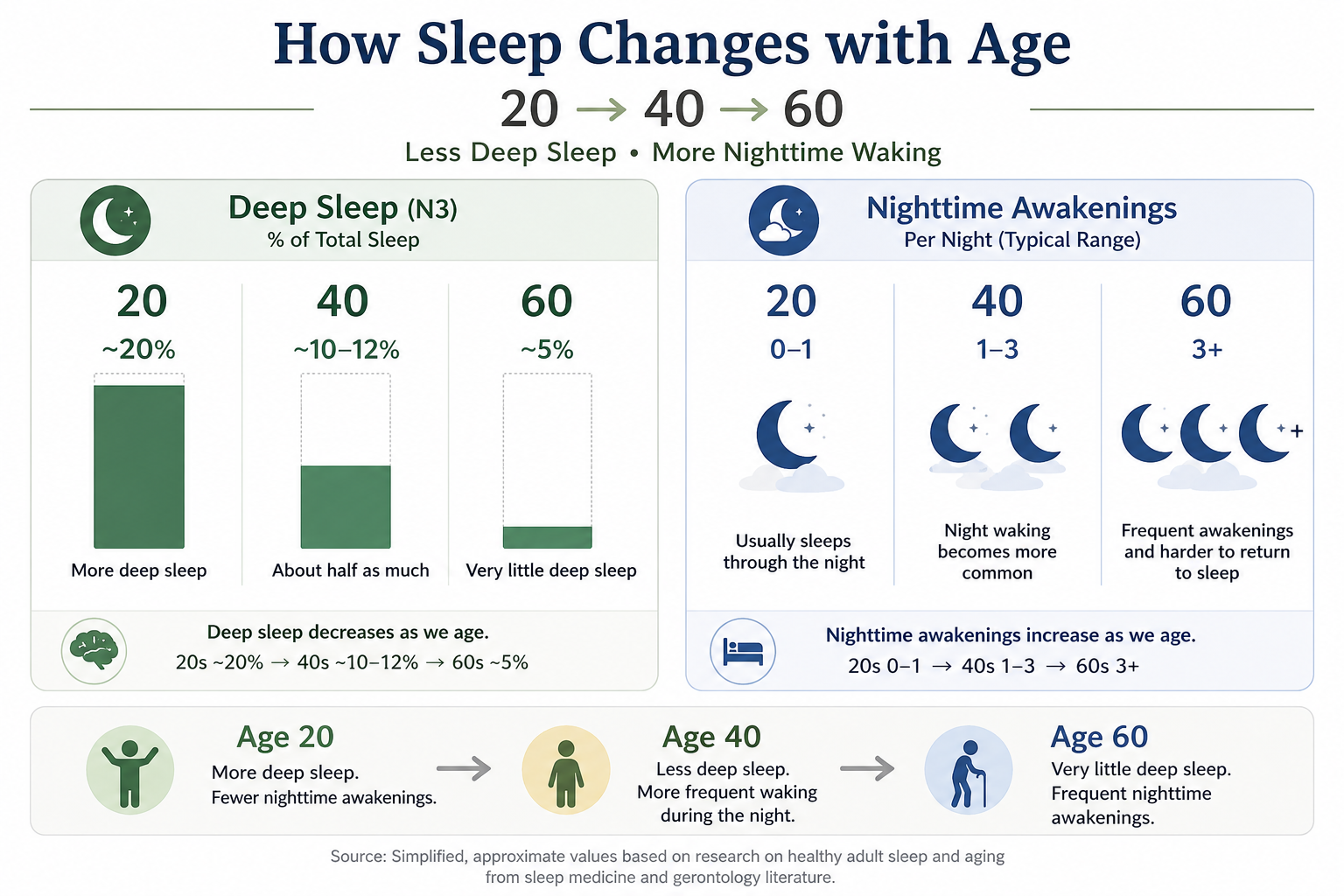
The research backs that up. MedlinePlus describes this as a normal part of aging, noting that older adults spend less time in deep, dreamless sleep and often wake three to four times a night. That’s more of an observed pattern than a full explanation of why it happens, but it was reassuring to see it described as typical rather than alarming.
Mayo Clinic Press adds another piece: as we age, our internal clock tends to shift earlier, which means feeling sleepy earlier in the evening and waking up earlier too. That actually matched what I’d been noticing — tired by 9 p.m., wide awake by 3 a.m.
The Perimenopause Layer
For women, there’s an additional factor: the hormonal swings of perimenopause. As estrogen and progesterone fluctuate, they can affect temperature regulation, melatonin release, and mood — which shows up as night sweats and fragmented sleep for a lot of us. A 2023 review on reproductive hormones and sleep disturbances across a woman’s lifespan backs this connection up with fairly solid review-level evidence, though how much it affects any one person seems to vary a lot.
I go deeper into the actual biology behind this 3 a.m. wake-up in a separate piece.
Sleep Supplements: Separating Evidence from Marketing
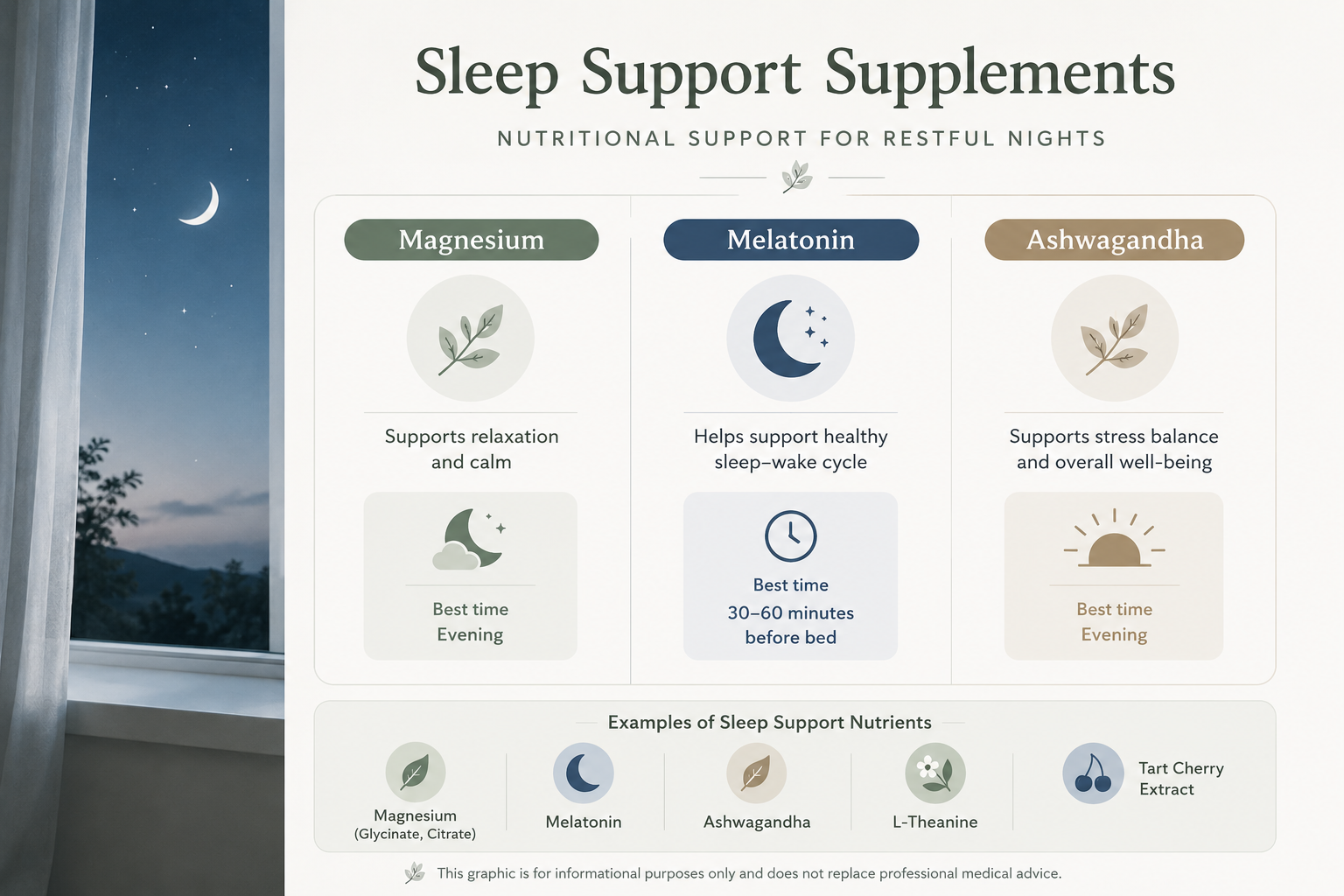
Supplements were the first thing I reached for once my sleep started falling apart. But once I looked into each ingredient individually, the quality of the evidence was all over the place — some had a handful of small studies, others had more consistent results across several trials.
Melatonin and L-Theanine: A Reality Check
Melatonin is the obvious first stop, but I was surprised by how many products on shelves come in doses like 10mg. Some people report vivid nightmares or next-day grogginess at those higher doses, and the long-term safety picture still isn’t fully settled.
One recent observational study suggested a possible association between long-term melatonin use and cardiovascular outcomes, but it did not establish that melatonin itself caused those outcomes.
L-theanine gets a lot of good word-of-mouth, but the research looking at it on its own is thinner than I expected. Most of what’s available studies it in combination with other ingredients, so it’s hard to say it works reliably by itself.
What Actually Has Evidence: Ashwagandha, Tart Cherry, and Magnesium
Among the supplements I reviewed, ashwagandha had some of the most consistent evidence from randomized controlled trials. Several RCTs, including studies by Langade and colleagues, reported improvements in both sleep efficiency and the time it took participants to fall asleep. Tart cherry also has support from randomized trials, although the evidence base is smaller.
Magnesium turned out to matter more in the details than I expected. Magnesium citrate absorbs well but can cause digestive upset for some people, while magnesium glycinate tends to be gentler on the stomach with decent bioavailability. If a label just says “magnesium” without specifying the form, it’s worth digging a little further.Magnesium oxide is inexpensive but generally less bioavailable than glycinate or citrate.
💡 Quick Tip: Check the Form, Not Just “Magnesium”
| Magnesium Form | Bioavailability | Notes |
|---|---|---|
| Glycinate | High | Gentle on the stomach and well absorbed — often recommended for sleep |
| Citrate | High | Absorbs well, but can cause digestive upset (diarrhea) in sensitive people |
| Oxide | Low | Cheap, but poorly absorbed by the body |
For the specific doses I tried and how my body actually reacted, I go into much more detail in my own experience post.
💡 Vera’s Note I tried most of these ingredients myself while working through my own 3 a.m. wake-ups. I’ve written up exactly what doses I started with, what side effects showed up, and how the clinical data compared to what I actually felt. You can read my full personal experience with sleep supplements.
A deeper dive into specific formulations, certifications, and fillers is in the works too. Best Supplements for Deep Sleep: Magnesium, Melatonin & More
Exercise and Sleep: Managing Midlife Cortisol
Along with the 3 a.m. waking came this specific feeling — a wired, anxious alertness with no obvious cause. It started to make more sense once I read about how cortisol imbalance can show up this way.
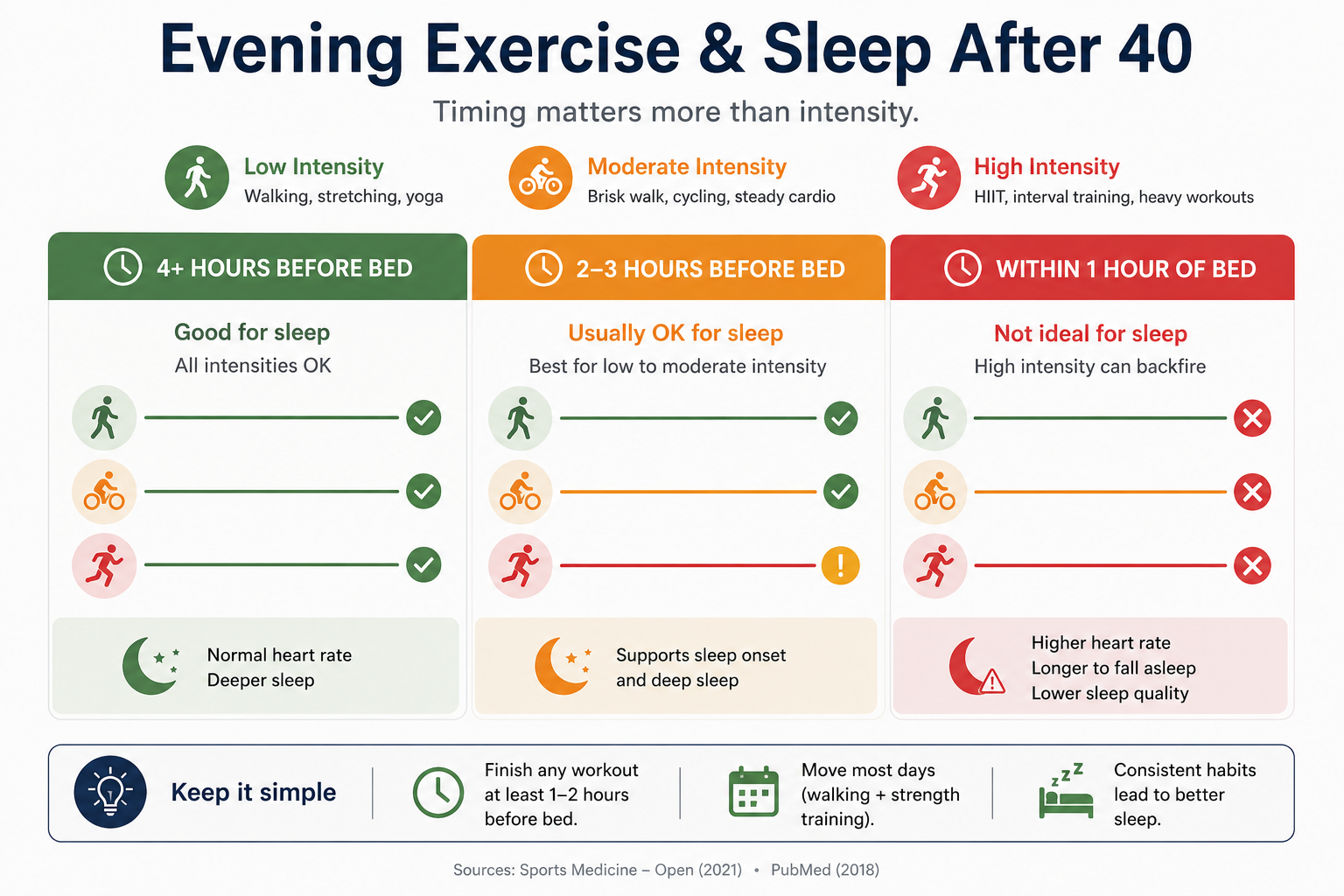
A (systematic review and meta-analysis )found that physical activity helps lower cortisol, with meaningful — though not dramatic — improvements in sleep quality. One caveat worth flagging honestly: most of the participants across the studies in that review were breast cancer patients, with very few men or older adults included, so I’d treat the findings as promising rather than settled for a general midlife population.
Regular moderate-intensity cardio (often called Zone 2 training) or strength training may help support better sleep by improving stress regulation. Intense exercise right before bed, however, may actually work against you. I’ll take a closer look at what Zone 2 training involves—and why exercise timing matters—in a separate article.
Keep Reading: Can Exercise Improve Your Sleep Quality?
Midlife Diet: Preventing the 3 A.M. Blood Sugar Dip
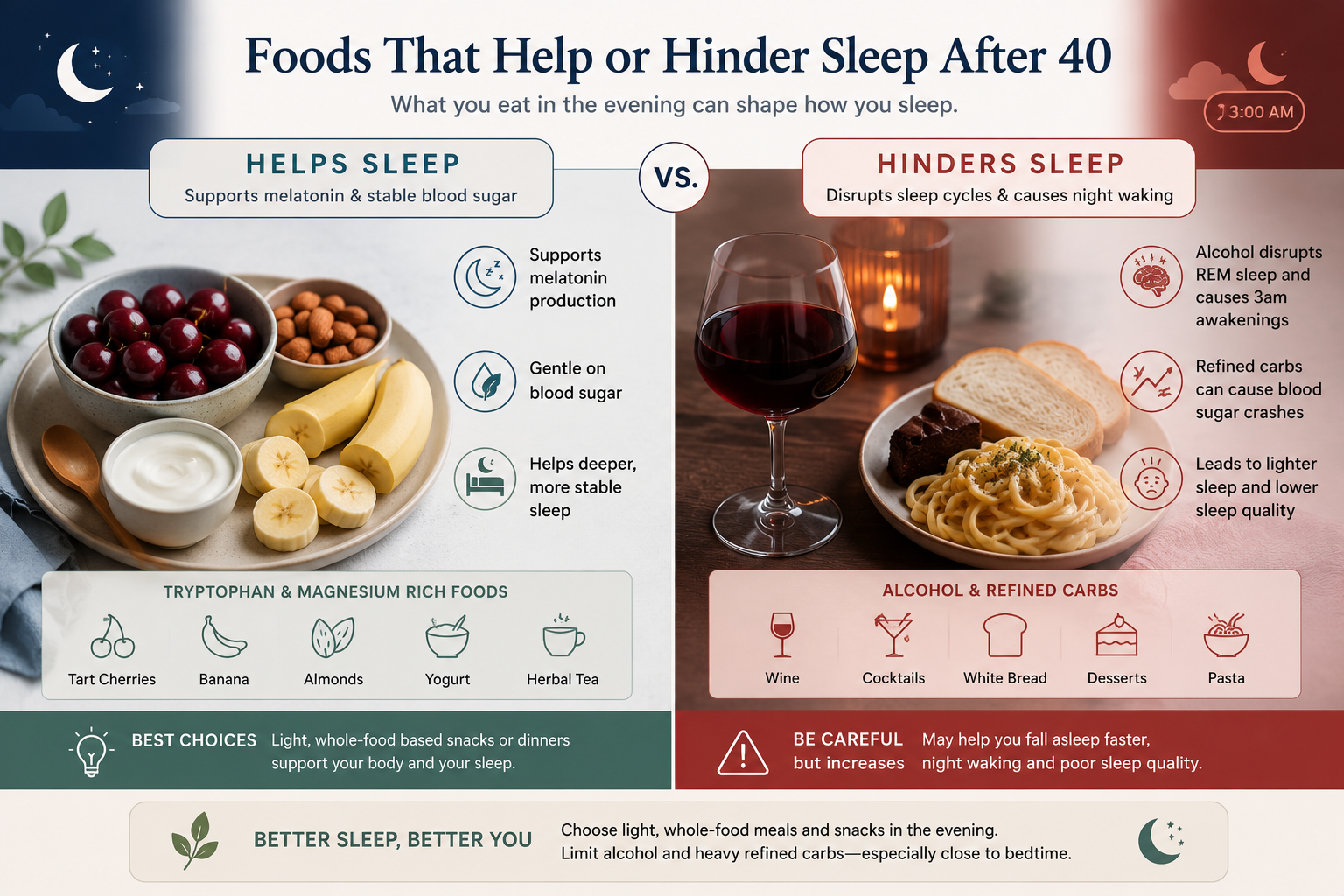
This section hit closest to home. One proposed explanation is that refined carbs or alcohol in the evening can cause a nighttime blood sugar dip, which the body treats as an emergency — releasing cortisol and adrenaline that jolt you awake. Reading that felt like finally getting an answer for why 3 a.m., specifically.
That said, this is still mostly a physiological explanation rather than something proven with large-scale trials specifically testing “evening diet causes 3 a.m. waking” in midlife women. It’s a compelling hypothesis, not a settled fact.
Alcohol fits a similar pattern. It shortens the time it takes to fall asleep, but a (PubMed review on alcohol and sleep) found that it delays REM sleep and fragments sleep more in the second half of the night. A (more recent 2024 study) found that consecutive nights of pre-bed drinking significantly reduced REM sleep and disrupted overall sleep architecture.
An older( French study )noted that slow-wave sleep can even appear to increase early in the night — but that’s something of an illusion, since the cost shows up later as fragmentation and lost REM. In other words, “a drink helps me sleep” is only half true. That said, this varies a lot person to person and drink to drink, so I wouldn’t say one glass is off-limits across the board.
Lighter evening meals built around tryptophan-rich foods or complex carbs may help, though most of that research is still small-scale.
Foods and Drinks That Improve Sleep (And What to Avoid)
Bedroom Upgrades: Sleep Hygiene That Fits Midlife
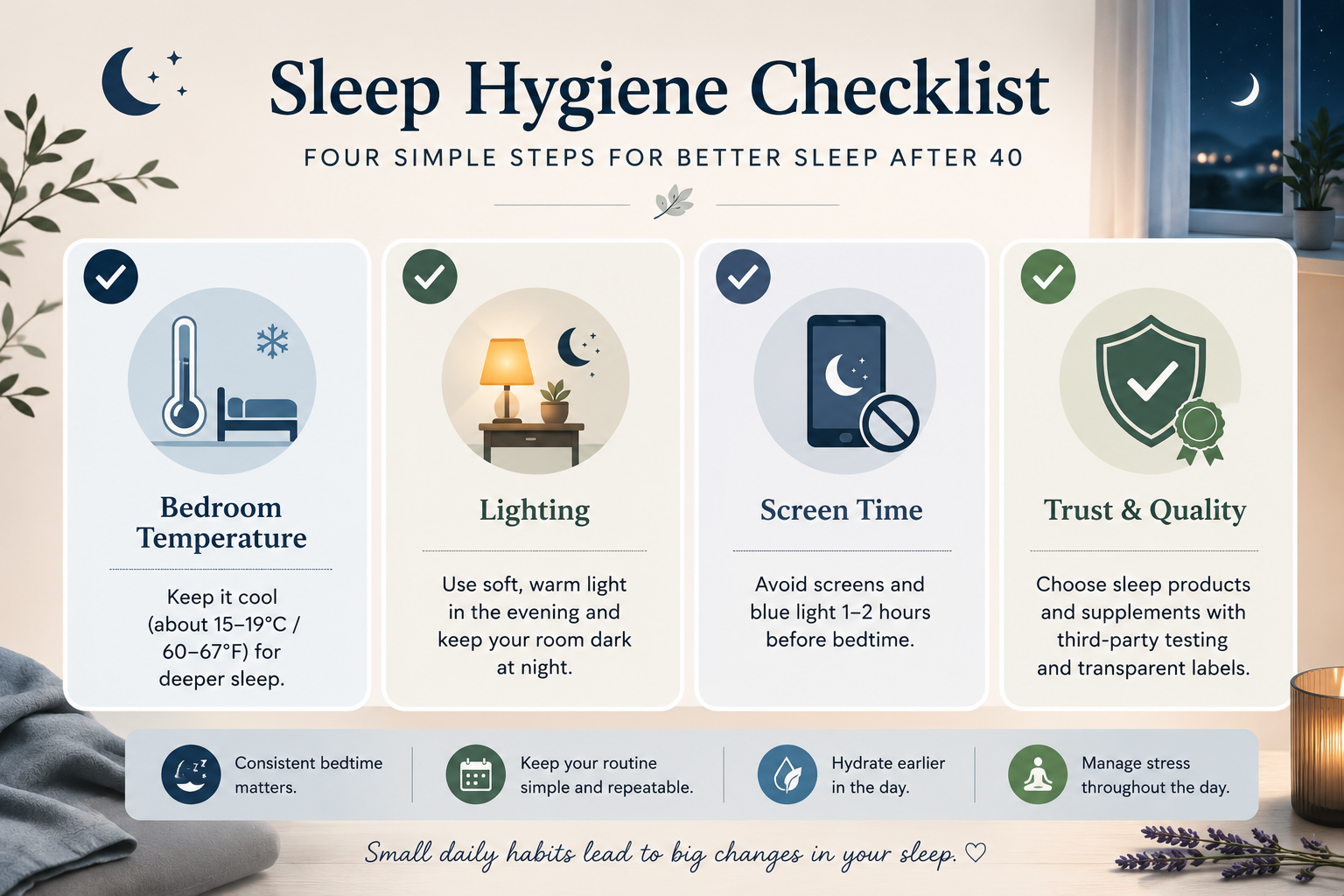
The last piece I looked into was the sleep environment itself. Because temperature regulation gets harder after 40, keeping the bedroom cool — somewhere around 60–66°F — comes up repeatedly as a way to reduce night sweats. Cleveland Clinic recommends roughly that same range, suggesting you think of your bedroom as “a cool, dark, quiet cave.”
Blue light was worth revisiting too. It suppresses melatonin for longer than warmer light and can shift your body clock by hours — and that effect doesn’t seem to fade much with age
For herbal sleep products specifically, checking for third-party testing is worth the extra minute — labels don’t always match what’s actually in the bottle. Harvard Health also has a solid rundown of the basics: consistent bedtime, caffeine and alcohol limits, and light management.
Sleep Hygiene Habits That Actually Work for Midlife
Sleep After 40: One Change at a Time
After going through all of this, my main takeaway is that some amount of nighttime waking after 40 is just part of the territory. But within that, there’s real room to work with — evening meals, screen time, daytime movement, and how I choose supplements.
I’ve tried several of these changes myself. Some helped noticeably, others didn’t move the needle much for me. That’s just my experience, though — I don’t think the same approach works identically for everyone, since the mix of factors behind sleep after 40 seems to differ from person to person. Watching your own pattern first seems like the more useful starting point than jumping straight to a fix.
The five areas covered here — causes, supplements, exercise, diet, and bedroom environment — will each get their own deeper article. Take them one at a time and start with whatever feels most relevant to your own nights.
Keep Reading
This is the big-picture map — here’s where each piece goes deeper:
Why the 3 a.m. wake-up happens, biologically — what’s actually shifting in your sleep architecture after 40.The Science Behind Waking Up at 3 A.M.
Which sleep supplements are actually worth trying — what the research supports and what’s mostly marketing hype. Supplements for Better Sleep After 40: What Actually Works?
How to pick a magnesium or melatonin bottle that isn’t junk —dosages, certifications, and fillers I check before buying.
Does exercise really help, or is that overhyped? — what the research says about timing and intensity. Can Exercise Improve Your Sleep Quality?
What I stopped eating (and drinking) after 9 p.m. — the blood sugar dip theory, explained. foods and Drinks That Improve Sleep (And What to Avoid)
Fixing my bedroom before fixing my supplements — temperature, light, and the changes that cost nothing. Sleep Hygiene Habits That Actually Work for Midlife
Common Questions
Is waking up at 3 a.m. actually common after 40?
It does seem to be a fairly common pattern — deep sleep decreasing and nighttime waking increasing shows up repeatedly across observational research. That said, if it’s happening every night or seriously affecting your days, it’s worth bringing up with a doctor.
Is it safe to just take high-dose melatonin?
Given the side effects some people report at high doses, and the fact that long-term safety still isn’t fully settled, I’d personally start with the lowest dose available. If you’re planning to take it regularly, it’s worth checking in with a healthcare provider first.
Should I start with supplements or lifestyle changes?
Personally, I found it made more sense to look at lifestyle factors first — caffeine, screen time, evening meals, daytime activity — and consider supplements if that wasn’t enough on its own. Your mileage may vary depending on what’s actually driving your sleep issues.
Is one glass of wine in the evening really a problem?
Even small amounts seem to affect REM sleep to some degree, but there isn’t strong enough evidence to say a single drink is off-limits. Paying attention to how you actually feel the next day is probably the most reliable way to judge it for yourself.
This article is based on personal experience and publicly available research. It is not a substitute for medical advice, diagnosis, or treatment. Please consult a healthcare professional about any health concerns or before starting new supplements.