Quick Answer
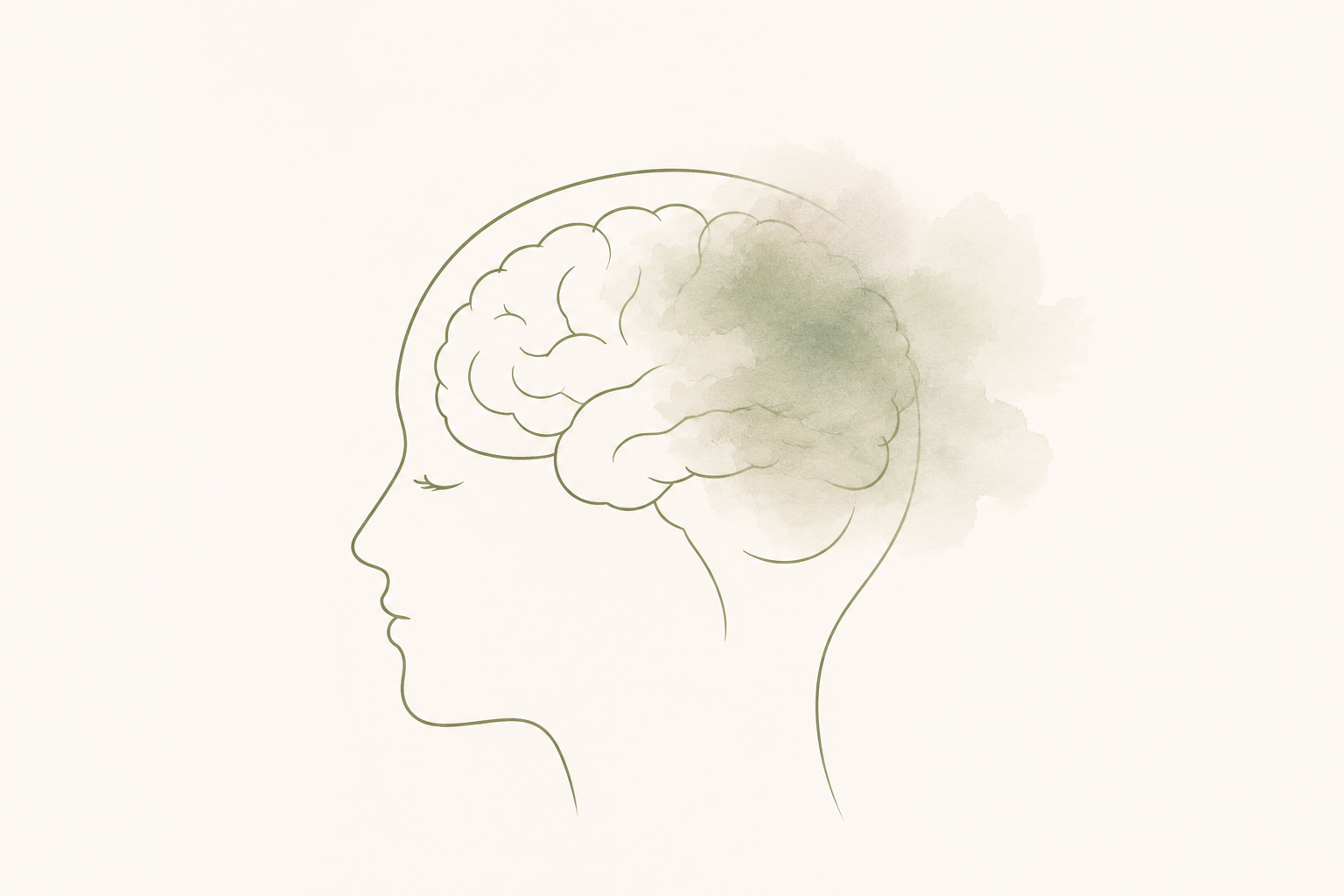
Here’s the short version: brain fog in midlife is genuinely common, and it’s rarely caused by menopause alone. Sleep, stress, nutrition, movement, and everyday habits are all tangled up in it too. The good news is that once you start pulling those threads apart one by one, most women see real improvement.
What Is Brain Fog, Really?
In my late 40s, I started noticing moments that were new to me — walking into a room and forgetting why, an easy word vanishing mid-sentence, rereading the same paragraph three times before it landed. At first it was just annoying. Then it kept happening, and annoying turned into “wait, is something actually wrong with me?”
Turns out “brain fog” isn’t an official diagnosis. You won’t find it written on a chart at your doctor’s office. It’s really shorthand for a cluster of symptoms — trouble focusing, memory slips, that general feeling of mental static — grouped together under one convenient label, and clinicians and major medical centers describe it as a common but usually mild part of the menopause transition rather than a disease in itself (Source: Harvard Health). Which means it’s not one condition with one cause. It’s a symptom pattern that can come from several different directions.
In practice, it tends to show up as:
- Words that won’t come when you reach for them
- Trouble holding your focus
- A tired, foggy feeling that doesn’t lift
- Thinking that just feels slower than it used to
Common Symptoms
Here’s what midlife women tend to describe most often:
- Forgetting appointments or where you put things
- Trouble concentrating
- Losing words mid-conversation
- Mental fatigue that lingers
- Multitasking feeling much harder than it used to
- A general sense of being “less sharp”
One thing that seems to be pretty universal: these symptoms rarely show up all at once. They tend to creep in one at a time until you notice the pattern.
What Causes Brain Fog in Midlife?
I went down a rabbit hole trying to answer this, and the honest takeaway is that there’s no single cause. Most of what I found points to several factors overlapping at once.
Hormonal shifts. During the menopause transition, estrogen levels rise and fall, and estrogen does seem to interact with the brain regions involved in memory and focus. I like to think of it like a weak WiFi signal — the connection isn’t lost, but it becomes less reliable. That said, I want to be careful here: major hormone therapy trials show it doesn’t reliably improve cognition and isn’t recommended for that purpose (Source: NAMS Hormone Therapy Position Statement).

Learn more: why brain fog actually starts during menopause
Not sleeping well. Poor sleep and daytime focus problems are linked pretty consistently across what I read. Night sweats and insomnia — both common in this stage of life — chip away at sleep quality, and that shows up the next day as fog (Source: Harvard Health).
Chronic stress. When you’re stressed, attention gets pulled in a dozen directions, which makes it harder to hold onto new information. Midlife tends to stack work, family, and health concerns all at once, so the stress load itself often goes up during this exact window.
Nutrient gaps. Low B12 or iron can show up as fatigue and poor concentration. Women with heavy periods are especially prone to running low on iron.
Not moving enough. Staying sedentary isn’t great for brain health either — this came up consistently across the research I looked at.
Other conditions. Thyroid issues, anemia, sleep apnea, and depression can all produce brain-fog-like symptoms on their own. One detail I found genuinely interesting: a 2024 longitudinal study following over 2,000 midlife women found that those whose hypothyroidism was well-managed with medication didn’t show meaningfully worse long-term cognitive decline compared to women without thyroid issues at all (Source: Thyroid journal, via PubMed). In other words, if your thyroid numbers are already in a healthy range and the fog is still there, it’s probably worth looking elsewhere for the cause.
How to Improve Brain Fog: Six Things That Actually Help
Short answer first: brain fog usually does get better. But the fix depends on the cause — sleep problems need a sleep-focused approach, nutrient gaps need those nutrients addressed. There’s no single move that solves it for everyone. That’s the most honest conclusion I landed on after all this reading.
Here’s what actually seemed worth doing, based on what I found. I’ve got a deeper dive planned for each one — this is just the “why it matters” version.

1. Rule out the obvious first. Before assuming it’s “just menopause,” it’s worth looking broadly at sleep, stress, mood, and any underlying health issues. Thyroid function and anemia are both things a simple blood test can rule in or out, so that’s a reasonable place to start.
why brain fog actually starts during menopause
2. Take a second look at supplements — carefully. I’ll be honest: the evidence that supplements “fix” brain fog just isn’t strong yet. But if you’re genuinely deficient in something, correcting that deficiency does seem to help with fatigue and focus. So the real first step isn’t grabbing a handful of pills — it’s figuring out what you’re actually short on.
whether supplements can really move the needle
3. Move your body regularly. Research consistently suggests a link between regular exercise and brain health, including in the areas involved in memory — one often-cited trial found that moderate-intensity exercise three days a week increased hippocampal volume, a key memory-related brain region (Source: Harvard Health). It’s not a change you’ll necessarily feel day to day, but it’s enough to make moving worth prioritizing.
4. Eat with your brain in mind. Diets built around fruit, vegetables, and fish are linked to better long-term cognitive health. This isn’t a “eat this one food and your head clears” situation — it’s much more about the overall pattern over time.
5. Tighten up daily habits. Better sleep hygiene, stress management, learning new things, and staying socially connected all came up as supportive of cognitive function.
6. Talk to a doctor if you need to. If you’ve tried things on your own and nothing’s shifting — or the fog is genuinely disrupting your life — it’s worth getting checked out. Thyroid and anemia are both things bloodwork can confirm or rule out, so there’s no reason to just tough it out.
When Brain Fog Isn’t Just Brain Fog
Most brain fog eases up with time or once you address the underlying cause. But if any of these show up alongside it, that’s a different situation entirely:
- Sudden confusion
- Weakness on one side of the body
- Vision changes
- A severe headache
- Memory loss that’s getting rapidly worse
If you notice any of these, get medical care right away. That’s a signal that goes well beyond ordinary brain fog.
Common Questions
Is midlife brain fog permanent?
Based on what I’ve read, no — for most women it’s temporary. A 2025 meta-analysis found cognitive complaints were most pronounced in perimenopause but weren’t consistently worse afterward, which points to a transitional pattern rather than steady decline (Source: PubMed). That said, everyone’s timeline looks a little different.
Is brain fog the same thing as dementia?
No. Brain fog is generally mild and comes and goes. Dementia is a much broader, progressive decline in cognitive function. You don’t need to confuse the two, but if symptoms keep worsening, it’s worth seeing a doctor just to be sure which one you’re actually dealing with.
Can supplements treat brain fog?
Not really — at least not based on the evidence available right now. If you’re dealing with an actual deficiency, correcting it can help. But for someone without a deficiency, there’s not strong evidence that a specific supplement will meaningfully clear the fog.
Does exercise really help?
The link between exercise and cognitive health shows up fairly consistently in the research. There isn’t a huge body of studies specifically on brain fog yet, but the broader brain-health evidence is encouraging.
Can poor sleep actually cause brain fog?
Yes — this is one of the better-supported connections. Poor sleep and next-day drops in focus and memory show up together again and again in what I read, and clinicians link perimenopausal night sweats and insomnia directly to daytime brain fog (Source: Harvard Health).
Most days, brain fog in midlife just means your brain is dealing with a lot at once — hormones, sleep, stress, and habits all pulling in different directions. It’s frustrating, but it’s rarely permanent, and it responds well to figuring out what’s actually driving it for you rather than guessing. The next step is figuring out which factor is contributing most in your own case.

Keep Reading:
① Why brain fog actually starts during menopause — the biology behind it, explained without the jargon. Why Does Brain Fog Happen During Menopause?
② Whether supplements can really move the needle — what the evidence supports, and what’s mostly marketing. Can Supplements Really Help Brain Fog? Evidence vs. Hype
③ Which supplements are actually worth trying — research-backed picks and how to check for quality.
Best Supplements for Brain Fog:What the Research Shows.
https://midlifora.com/brain-fog-supplements-evidence/
④Eating in a way that supports a clearer head — the food patterns linked to better cognitive health.
Foods That Support Brain Health and Clarity
This article is based on personal experience and publicly available research. It isn’t a substitute for medical diagnosis or treatment — please talk to a healthcare provider about your own symptoms or before starting any new supplement.