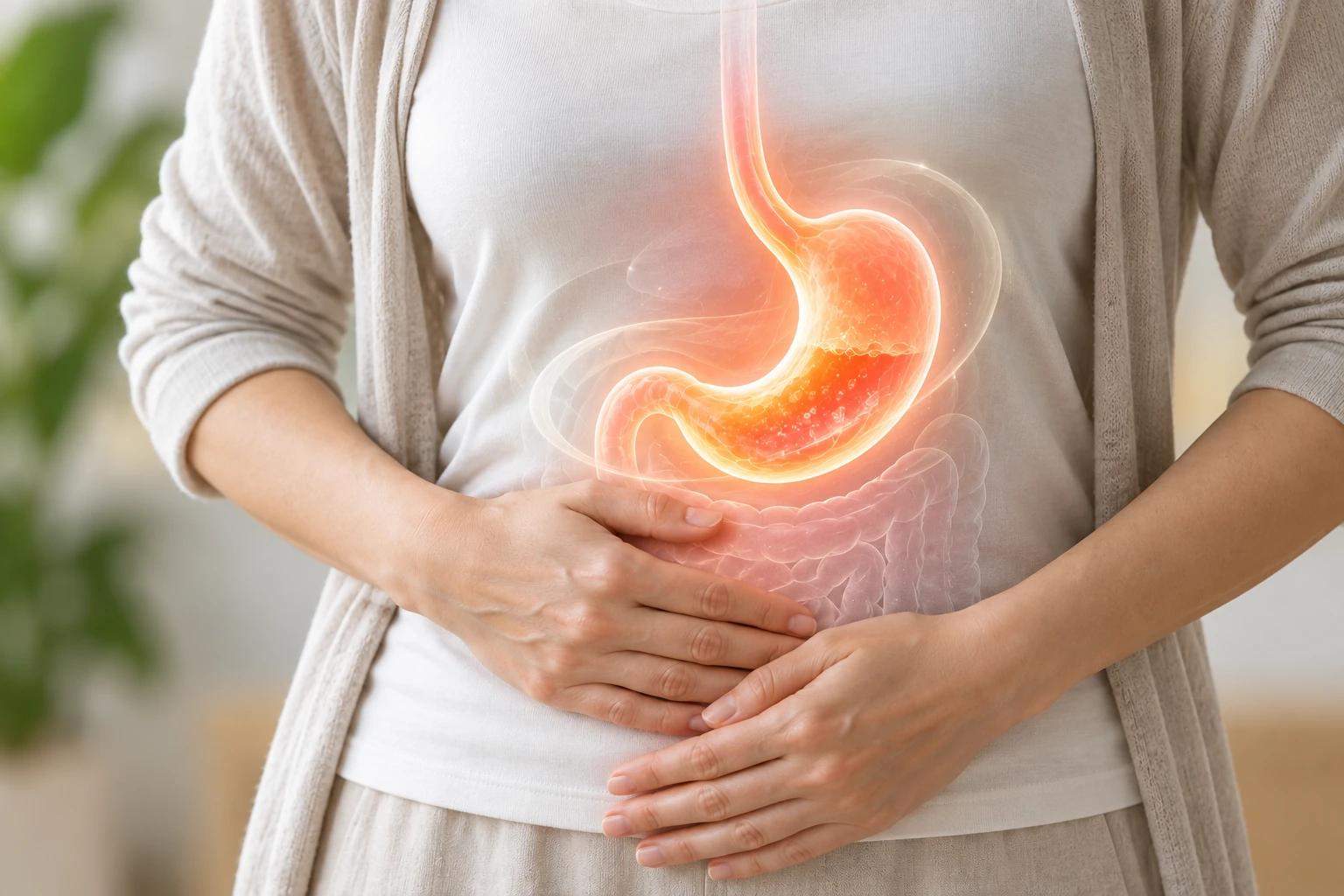
My gut health after 40 didn’t fall apart overnight. It just started feeling different, little by little.
In my 20s and 30s, my digestion was never great, but it never bothered me much either. I ate what I wanted and didn’t think twice about it. Somewhere in my 40s, that changed. More days ended with an uncomfortable stomach. Mornings felt off. The shift was so gradual that I started treating it as normal — just something that comes with age.
By my late 40s, I couldn’t ignore it anymore. I got an endoscopy. The result was mild gastritis, nothing serious. My doctor told me to chew slower and cut back on spicy food and soda. I did. Honestly, I didn’t feel a dramatic difference.
Does Gut Health Really Change After 40?
The first thing I wanted to know was simple: does turning 40 actually damage your gut?
The research was more reassuring than I expected. A 2023 review in Nutrition Today found that the digestive system holds up fairly well through normal aging on its own. Most age-related digestive problems come from other conditions or lifestyle habits, not aging itself. One caveat: most of the data behind this review came from adults 60 and older, so it doesn’t map perfectly onto people in their 40s and 50s.
So it’s less “you’re 40, so your gut is failing” and more “your body shifts a little with age, while your habits often stay exactly the same as they were at 25.” Age and habits are two different things, and it helps to tell them apart.
The Gut Symptoms Worth Paying Attention To
Around this age, the most common complaints tend to be:
- Bloating
- Constipation
- Diarrhea
- Acid reflux
- Feeling full too quickly
- Changes in bowel habits
The most useful approach isn’t treating each symptom as its own disease. It’s asking, “What actually changed in my routine recently?” instead of blaming age by default.
A Swiss study that tracked adults from their early 20s into their late 40s found that, on average, about one in five reported stomach or intestinal symptoms lasting at least a week (or three months or more, for the chronic cases) — a specific bar, not just occasional discomfort. Women reported these symptoms noticeably more often than men. Still, the pattern holds: this is common, not rare.
What Can Affect Gut Health in Midlife?
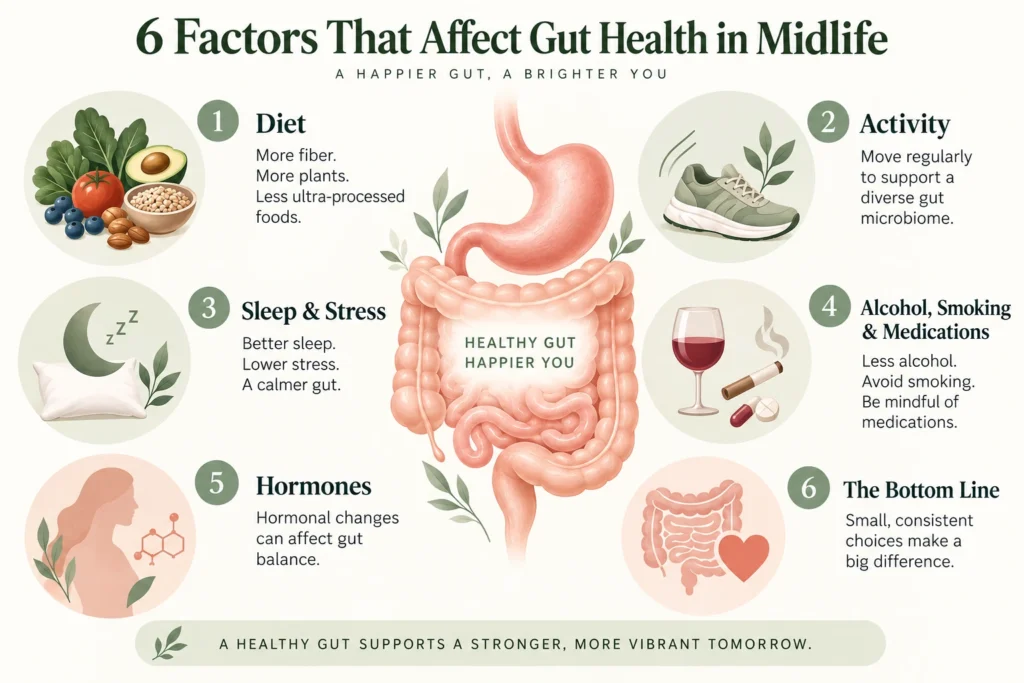
Diet and Eating Patterns
What you eat, how varied your meals are, and how irregular your eating schedule is all connect to gut health.
Physical Activity
More movement tends to support a healthier gut environment. The evidence isn’t strong enough to say exercise alone fixes digestion, but it’s a consistent factor.
Sleep and Stress
Poor sleep and chronic stress may affect gut signals. Most of this research still comes from small studies or animal models, so it’s fair to treat the link as likely, not proven.
Alcohol, Smoking, and Medications
Alcohol, smoking, and certain medications — acid reducers and antibiotics, for example — can change your gut environment. This one hit close to home. After my gastritis diagnosis, I was prescribed an acid reducer, and that’s when I learned the medication itself could affect my gut too. The point isn’t to stop taking it. It’s knowing that what you’re already taking might be part of the picture.
Hormonal Changes
Hormones matter here too, and they deserve their own section — more on that next.
What About Perimenopause and Gut Health?
This is the question most women in their 40s eventually ask.
At the Menopause Society’s October 2025 conference, a survey of 564 UK women in perimenopause or menopause found that 94% had experienced digestive symptoms like bloating, constipation, stomach pain, or reflux. That number needs context: it was a conference poster, not a peer-reviewed study, and participants volunteered through a menopause platform — meaning people already dealing with digestive issues may have been more likely to respond. A more accurate takeaway is that digestive symptoms are common during this transition and often go undiscussed, not that nine out of ten women are guaranteed to have them.
Research on hormones and gut bacteria is still inconsistent from study to study. It’s too early to say exactly how menopause reshapes the gut microbiome.
Learn more: Perimenopause vs. Menopause
What Actually Helps Your Gut After 40?

- Varied, high-quality meals
- Enough fiber
- Enough water
- Regular movement
- Enough sleep
- Managing stress
- Paying attention to your own patterns
Research continues to support the basics: dietary fiber, dietary variety, physical activity, adequate hydration, sleep, and other everyday habits.
Learn more: High-Fiber and Fermented Foods for Gut Health
Do You Need Gut Health Supplements?
I’ve tried a few supplements marketed for gut and stomach health. Some seemed to help. Others did nothing I could notice. What I learned is simple: what works for me won’t necessarily work for you. Two people can have similar symptoms with completely different causes underneath.
So — do you need one? Maybe. Maybe not. That’s the honest answer.
Learn more: Supplements for Midlife Gut Health
Don’t Blame Every Digestive Change on Aging
When a Change in Digestion Deserves a Closer Look
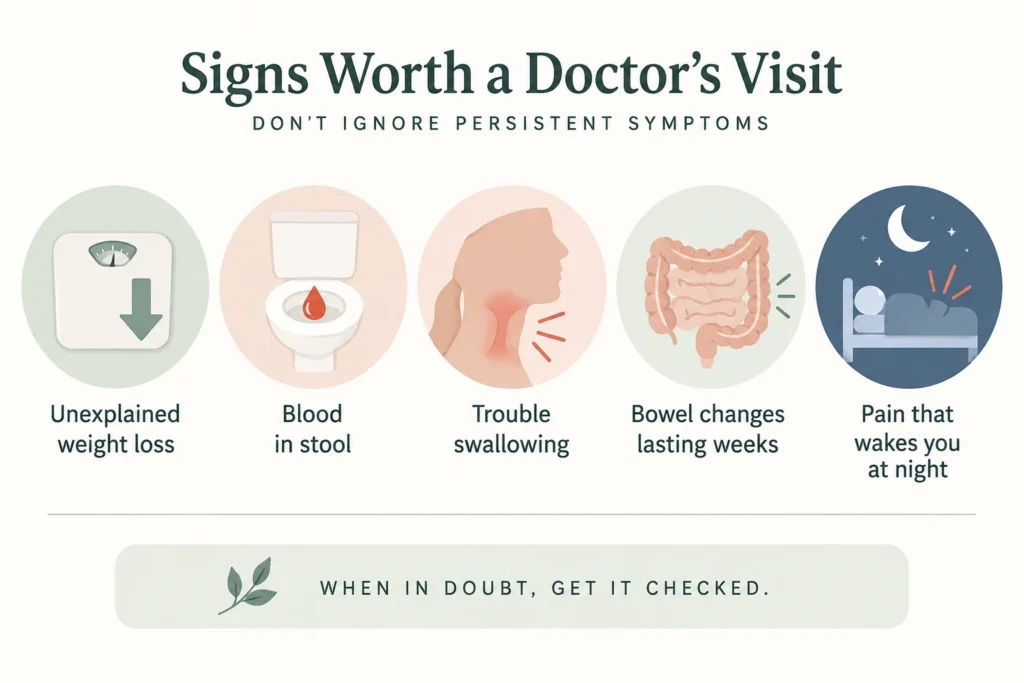
Everything above points to one idea: don’t blame age for everything. But that doesn’t mean every symptom is harmless either. Unexplained weight loss, blood in your stool, trouble swallowing, bowel changes lasting more than a few weeks, or pain that wakes you up at night — these deserve attention, not a shrug.
When to Talk to a Healthcare Professional
I put off getting checked for longer than I should have. It turned out fine, but looking back, I spent a lot of time assuming it was “just age.” If you’re dealing with any of the signs above, or ongoing discomfort that isn’t improving, talk to a doctor instead of guessing on your own.
Common Questions
Is digestive trouble after 40 just normal aging?
Not entirely. Research suggests the digestive system handles normal aging fairly well on its own. Most problems trace back to habits, other health conditions, or lifestyle changes that happened to line up with getting older.
What are the most common gut symptoms in your 40s?
Bloating, constipation, diarrhea, reflux, feeling full quickly, and shifts in bowel habits are the most frequently reported.
Do I need probiotics after 40?
Not necessarily. Some people notice a benefit, others don’t. It depends on your individual situation, so there’s no one-size-fits-all answer.
When should I see a doctor about gut symptoms?
See a doctor if you notice unexplained weight loss, blood in your stool, trouble swallowing, bowel changes lasting several weeks, or pain that wakes you at night. Ongoing discomfort that isn’t improving is also worth checking.
I never found one perfect diet or one supplement that fixed everything. What actually changed was paying closer attention — cutting back on foods I knew bothered me, cutting caffeine, and noticing signals I used to ignore. Maybe that’s the real shift in midlife: not that your body suddenly stops working the way it used to, but that you can’t tune out its signals as easily as you once could. No grand plan required. Just a simple loop: notice, adjust, check again.
Keep Reading
Curious what’s actually different between perimenopause and menopause? Perimenopause vs. Menopause breaks down the distinction.
Wondering what to actually put on your plate? High-Fiber and Fermented Foods for Gut Health has the specifics.
Thinking about trying a supplement? Supplements for Midlife Gut Health: What Works walks through what the evidence says.
This article is based on personal experience and publicly available research. It is not a substitute for medical diagnosis or treatment. Please consult a healthcare professional about any health concerns or medications.