Quick Takeaways
✔ Your overall daily eating pattern matters more than any single “sleep food” ✔ Kiwi and tart cherry are among the few foods with actual human sleep studies behind them ✔ Heavy, late, or highly processed meals are consistently linked to worse sleep ✔ Cutting back on caffeine and alcohol has the strongest research support of everything covered here ✔ When you eat may matter as much as what you eat
There are still nights like this. I’m exhausted, but sleep won’t come, and I lie there tossing and turning while my stomach feels bloated and gassy. I’ve noticed a pattern over the years — when dinner doesn’t sit well with me, sleep doesn’t either. My 3AM brain always has very strong opinions about this. Everyone’s digestion is different, though, so something that bothers my gut might not bother yours at all.
That got me wondering about something bigger than “what should I eat before bed.” I used to think that if my dinner looked healthy enough, my sleep would magically cooperate. It didn’t. So maybe it’s not the last snack that matters, but what I eat across the whole day. Diet is just one piece of the puzzle I’ve been working through in my full guide to sleep after 40, but I wanted to dig into the food side specifically. So I went looking into the research on foods for sleep, and what I found wasn’t as tidy as I expected.
It’s Not Just About Bedtime Snacks — Your Whole Day’s Diet Matters
Most of the recent research I found talks less about “sleep snacks” and more about your overall eating pattern. People who eat closer to a Mediterranean-style diet tend to report better sleep quality and fewer symptoms of insomnia, though most of this comes from observational research, so it’s hard to say the diet itself causes better sleep (Source: 2024 systematic review, PMC).
Similarly, people who eat more vegetables, fruit, and whole grains tend to sleep somewhat better. But again, most of these studies just looked at diet and sleep at a single point in time, so it’s genuinely unclear whether poor sleep leads to worse eating, or worse eating leads to poor sleep.
I also came across data linking higher intake of ultra-processed foods with more frequent sleep disruption. Same caveat applies — it’s a pattern worth noting, not proof of cause and effect.
One small study did catch my attention: people who ate more fiber and less saturated fat and sugar at dinner had longer stretches of deep sleep and woke up less during the night. The reverse was true for heavier, sweeter dinners. It’s a small sample, so I’m treating it as a data point, not a rule. For a while I blamed hormones for all of it. To be fair, they deserved some of the blame — just maybe not all of it.
If you’re curious how movement fits into all this, I already went down that rabbit hole in my deep dive on whether exercise can actually improve sleep quality — worth a look if diet alone doesn’t feel like the whole picture.
The Sleep Nutrients Worth Knowing About Before We Talk Food
Before jumping into specific foods, I wanted to understand why certain foods keep getting mentioned in sleep articles. This is background knowledge, not a supplement pitch.
| Nutrient | Found In | Claim to Fame |
|---|---|---|
| Melatonin | tart cherries, pistachios | Regulates sleep-wake rhythm; food amounts are tiny vs. supplements |
| Tryptophan | turkey, chicken, greek yogurt, cheese | Precursor to serotonin/melatonin; evidence is mixed |
| Magnesium | pumpkin seeds, almonds, spinach | Backed by one small supplement study, not food-level doses |
| Potassium | bananas, kiwi, avocado | Linked to fewer cramps; little direct sleep res |
Diet alone doesn’t always get you all the way there, though. If you’ve already cleaned up your evening eating and caffeine and you’re still not sleeping well, that’s usually when it’s worth looking at supplements — I go through what I actually check before buying anything in my sleep supplement buying guide.
Foods for Sleep That Might Actually Help
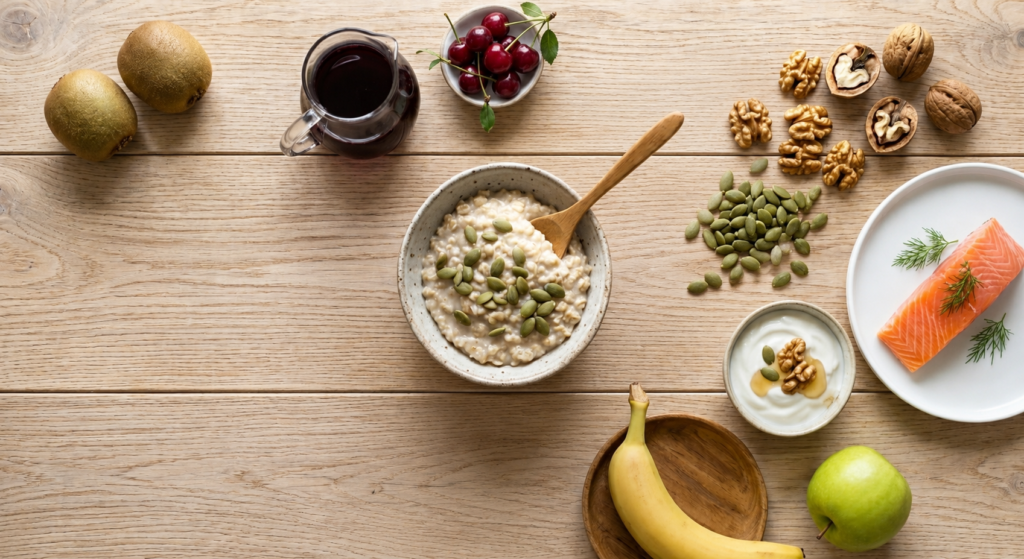
This is where I get into individual foods. Digging through the research, my honest takeaway was that the evidence behind most foods for sleep is weaker than the internet makes it sound. I’ve grouped them by how much direct research actually exists — foods that have been tested in their own sleep studies, versus foods that are recommended mostly because of what’s in them.
Foods with Stronger Evidence
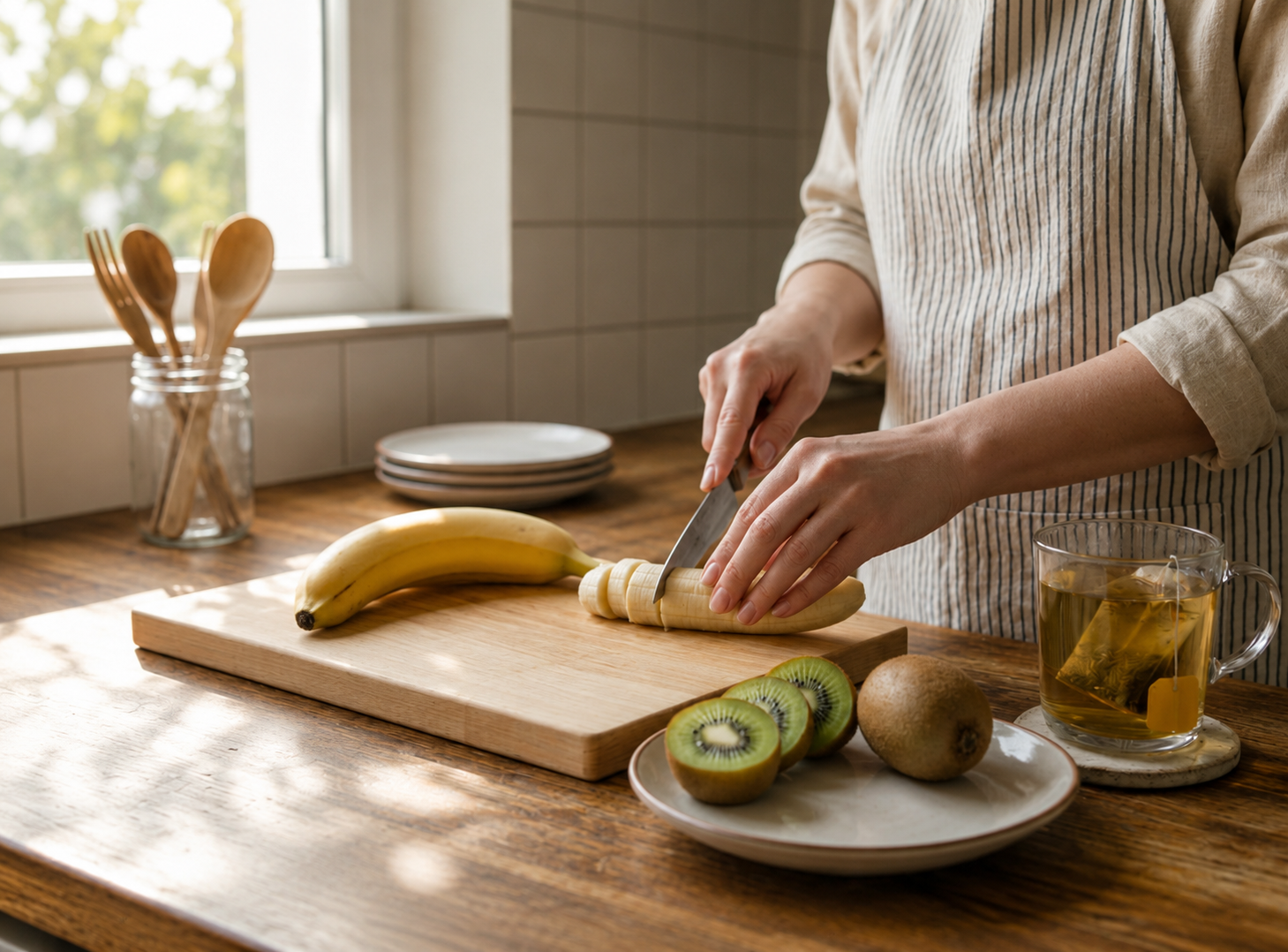
Kiwi — Contains vitamin C, antioxidants, a bit of serotonin, and fiber. A small student study found some sleep measures improved after eating two kiwis an hour before bed, though the sample was too small to generalize. A six-week study on female university students in Saudi Arabia found no clear difference between the kiwi group and the control group (Source: Nutrition & Food Science). Personally, kiwi is gentle on my stomach, so it’s an easy evening choice for me.
Tart cherry (concentrate or juice) — Contains melatonin, anthocyanins, and tryptophan. In a study of 20 healthy adults, seven days of tart cherry concentrate raised urinary melatonin levels and modestly increased total sleep time (Source: PubMed). A small study in older adults with insomnia found roughly 84 more minutes of sleep by polysomnography (Source: PubMed). Both studies were short and small, and a 2025 systematic review concluded there may be a modest benefit, but larger trials are needed (Source: PMC).
Foods with Emerging Evidence
These foods are usually recommended based on what nutrients they contain, rather than because someone actually tested them directly for sleep.
Pumpkin seeds — Contain magnesium, tryptophan, and zinc. No trial tests them specifically for sleep, but the nutrient logic tracks. A nice-to-have, not a fix.
Fatty fish — Contains omega-3s, vitamin D, and tryptophan, all tied to the serotonin/melatonin pathway. No study shows one fish dinner changing that night’s sleep — but it fits naturally into a Mediterranean-style pattern, which does have research behind it.
Greek yogurt — Contains tryptophan and calcium. No dedicated sleep trial, but it’s a protein source that’s gentle on digestion, which is probably why it keeps getting recommended as an evening snack.
Oatmeal — Contains complex carbs, fiber, and small amounts of melatonin and magnesium. This one actually worked against me: at night it seemed to speed up my digestion and made it harder to fall asleep, though in the morning it felt gentle and helped with constipation. I called it a bedtime snack for a while. Looking back, it was mostly just boredom wearing pajamas. The research doesn’t show strong sleep benefits either way — it’s just often listed as a reasonable whole-grain option. Don’t assume it’ll help just because it’s commonly recommended; your body might respond differently depending on the time of day, like mine does.
Walnuts — Contain omega-3s, melatonin, and magnesium. Often cited as a melatonin food, but no trial shows walnuts alone change sleep.
Banana — Contains carbohydrates, potassium, vitamin B6, and a little tryptophan. “Bananas help you sleep” is a claim I’ve heard constantly, yet high-quality research testing bananas alone is scarce — the evidence is thinner than the popularity suggests. They sit fine with me at night, though that’s just my own digestion, not something the research backs up.
Drinks People Swear By for Sleep
| Drink | Known For | Evidence |
|---|---|---|
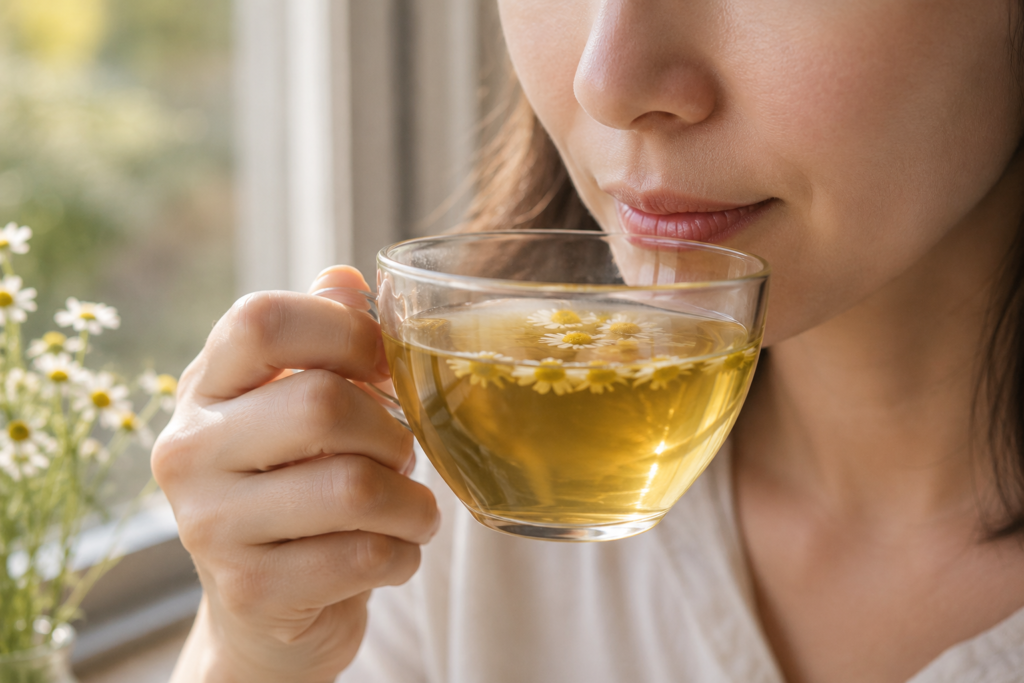
| Chamomile tea | Mild calming compound (apigenin) | Small, inconsistent studies |
| Tart cherry juice | Most-studied “sleep drink” | Short-term trials only; contains sugar |
| Warm milk | Tryptophan + calcium | Weak for plain milk; likely a ritual effect |
I drink chamomile most evenings because it settles my stomach — though honestly, I can’t tell if that’s the tea itself or just the comfort of a warm drink as part of a wind-down routine. I wish it were powerful enough to actually knock me out.
What My Dinner Plate Actually Looks Like Now
After going through all of this, my takeaway wasn’t “eat this one food.” It was: build a dinner around what your body tolerates well. Here’s roughly what mine looks like now:
A Sleep-Friendly Dinner Plate
✔ Protein — 🐟 Fatty fish ✔ Complex carbs — 🍚 A small portion of brown rice ✔ Vegetables — 🥬 Leafy greens, lightly cooked rather than raw ✔ Fruit — 🥝 Kiwi ✔ Drink — 🍵 Chamomile tea
Why this combination works for me: it’s light enough not to sit heavy before bed, has enough protein and complex carbs to avoid nighttime hunger, and skips the raw fiber and sugar that tend to backfire on my digestion.
I specifically keep leafy greens light or cooked, since raw fiber is hard on my digestion. Fiber gets a lot of praise for sleep, but if you load up on it and end up gassy like I do, it can work against you. In the end, whether your body handles a food comfortably matters more than whether it’s “supposed to be good for sleep.”
What I Try to Skip Before Bed
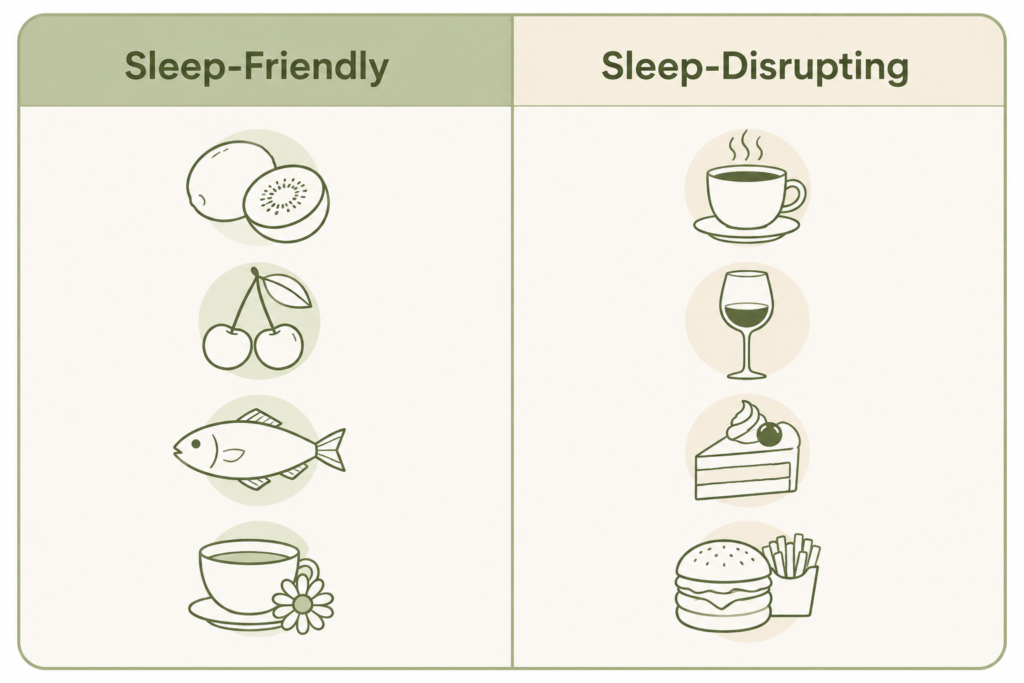
| Skip This | Why |
|---|---|
| Caffeine | Delays sleep onset, shortens total sleep time — well established |
| Alcohol | Fragments sleep later in the night; linked to more disrupted breathing during sleep |
| Overeating or eating late | Linked to reflux and heartburn |
| High-sugar foods | Linked to shorter, more fragmented sleep |
| Ultra-processed foods | Linked to more frequent sleep disruption |
The alcohol-and-breathing link comes from a 2026 study on diet and sleep (Source: PMC); most of the rest is observational, so treat these as patterns worth noticing rather than guarantees.
Timing: When You Eat Matters Too
Most sources suggest finishing your main meal two to three hours before bed to reduce reflux and nighttime nervous system activation. People with a habit of eating late tend to report shorter sleep and more frequent insomnia symptoms.
That said, “never eat before bed” doesn’t seem to be an absolute rule. A light, balanced snack — oatmeal with yogurt, or a bit of fruit with a small handful of nuts — may actually help prevent nighttime hunger or low blood sugar. Since digestion varies so much person to person, this isn’t one-size-fits-all. Oatmeal, for example, just doesn’t work for me at night, even though it’s a commonly recommended option.
Common Questions
Is it okay to eat something before bed?
If it’s light and easy to digest, it’s probably fine. The bigger factor seems to be how much you eat, not whether you eat at all.
Do bananas really help you sleep?
Probably not on their own. Despite their popularity, high-quality research supporting bananas as a sleep aid is limited. They sit fine with me personally, but I wouldn’t assume that applies to everyone.
Does warm milk actually work?
For plain milk, the evidence is weak. It might be more about the calming bedtime ritual itself than the milk’s nutrient content.
What foods naturally contain melatonin?
Tart cherries, pistachios, and walnuts come up most often. The amounts are small, though, so don’t expect supplement-level effects from food alone.
What’s the best bedtime snack?
There’s no single right answer. Something light with tryptophan and complex carbs together gets mentioned a lot, but finding what your own digestion tolerates matters more than chasing a specific food.
Going through all of this, my main conclusion was that when it comes to foods for sleep, good rest doesn’t come from one “superfood” — it comes from your overall daily eating pattern. Cutting back on caffeine and alcohol, and not eating too late or too heavy at dinner, were the two things that seemed best supported by the research I found. My sleep didn’t improve overnight. Ironically, sleep improvements rarely do.
If you want to try something today, start small: move dinner up a little earlier, or cut one cup of evening caffeine. If you’re still waking at 3AM despite changing your eating habits, diet may not be the whole story — the guides below cover the other pieces that helped me understand why sleep changed after 40.
Keep Reading
Wondering why sleep gets so fragile once you hit your 40s in the first place? My full guide to sleep after 40 covers the hormone and circadian-rhythm shifts behind it.
Wondering how movement fits into all this? My deep dive on whether exercise can actually improve sleep quality is worth a look.
Still not sleeping well even after cleaning up your diet? My sleep supplement buying guide walks through what I actually check before buying.
This article is based on personal experience and publicly available research. It isn’t a substitute for medical diagnosis or treatment — please talk to a healthcare provider about any health concerns or medications.