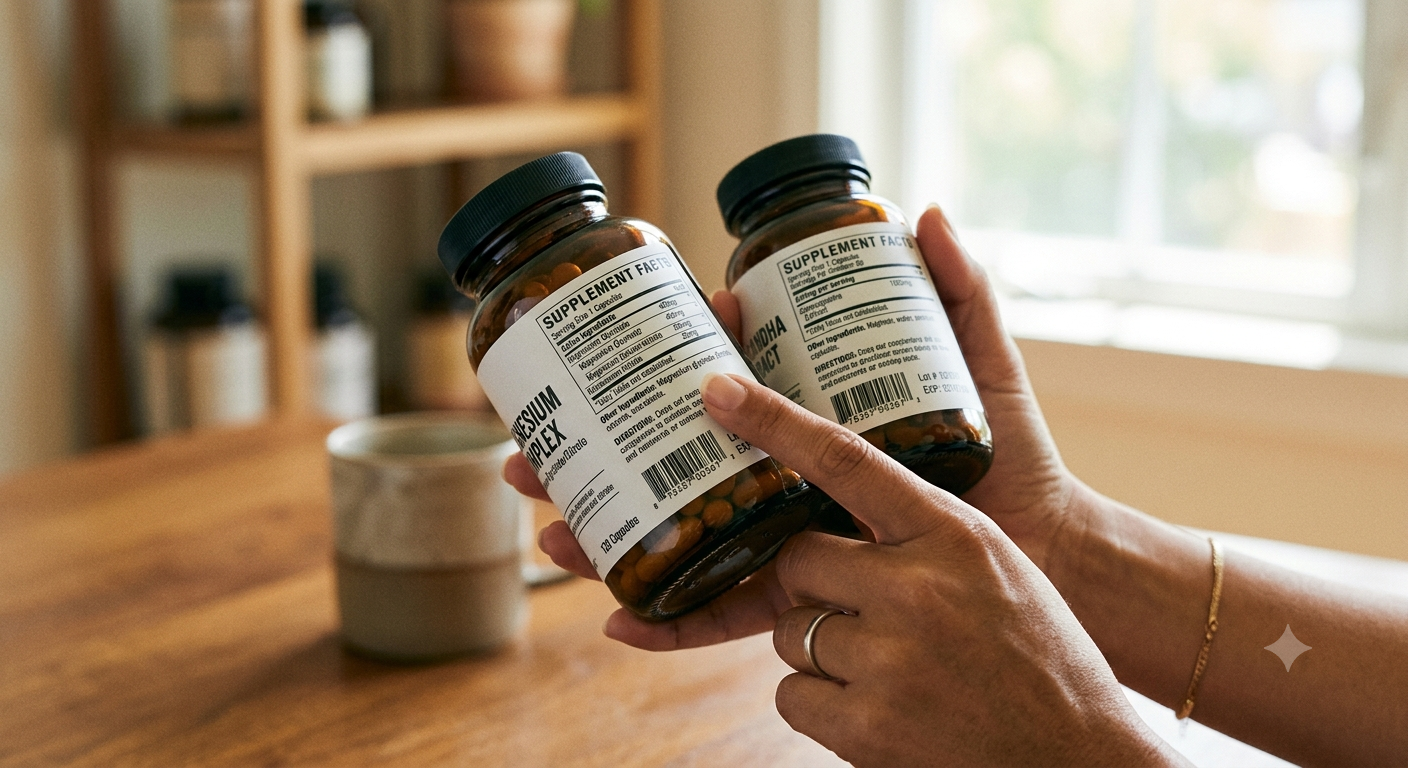
Magnesium: Reading the Label Correctly
Magnesium labels are a little confusing, mostly because two different numbers get mixed up: the total compound (raw material) weight, and the elemental magnesium that actually ends up in your body.
Elemental Magnesium vs. Compound Weight
A capsule can say “Magnesium Glycinate 1000mg,” but that doesn’t mean you’re getting 1000mg of magnesium.
Magnesium glycinate is a compound where one magnesium atom is bound to two glycine molecules (an amino acid). Think of it like a candy (the magnesium) wrapped in two layers of packaging (the glycine) — when you put it on a scale, you’re weighing the candy and the wrapper together, not the candy alone.
Based on the molecular weight, out of that 1000mg of magnesium glycinate, the actual magnesium — elemental magnesium — comes to a theoretical maximum of around 140mg. The remaining ~860mg is glycine, which does get absorbed, but doesn’t count toward your magnesium intake. That’s why the “1000mg” figure alone isn’t enough to go by — what matters is the smaller number usually printed nearby, something like “Magnesium (as Magnesium Glycinate) 100mg.” That’s your real dose.
Here’s the quick math: magnesium bisglycinate contains, at a theoretical maximum, around 14% elemental magnesium by molecular weight. In practice, commercial raw materials often run a bit lower — closer to 10% — because manufacturers add extra material for stability. So if a label claims 100mg of elemental magnesium, the total compound weight should be at least around 700mg, and in real products it’s commonly closer to 900–1,000mg.
This check only works when a label discloses both numbers — the elemental amount and the total compound weight. Not every brand lists both. When they do, and the compound weight comes in noticeably below that floor, it’s worth a second look — it can mean a cheaper, lower-absorption magnesium source was blended in without being disclosed.
Labels that fall short of this floor aren’t hard to find. Say a product lists “Magnesium Bisglycinate Chelate 1,100mg providing 200mg elemental magnesium.” Using the math above, getting 200mg of elemental magnesium would theoretically require at least about 1,400mg of raw material — so 1,100mg already falls short. A calculator and the label’s own two numbers are usually all it takes to catch a mismatch like this. When that happens, it’s worth wondering whether a lower-absorption filler (usually magnesium oxide) has been blended in alongside the labeled form.
A Note on Magnesium Oxide
To be clear about one thing: magnesium oxide isn’t a “bad” ingredient. It’s a legitimate, well-studied form of magnesium. In the gut, it reacts with water to form magnesium hydroxide — the same compound behind laxative products like Milk of Magnesia, which is formulated directly as magnesium hydroxide. That reaction is what gives oxide its osmotic, water-drawing effect in the digestive tract.
The issue isn’t the ingredient itself — it’s when it gets quietly blended into a product that’s labeled and sold as a higher-absorption (and pricier) form like glycinate, without that being disclosed. A supplement built around magnesium oxide, honestly labeled and sold as such, can be a perfectly reasonable — and cheaper — choice depending on the purpose. The issue is transparency, not which mineral form is “better.”
Citrate vs. Glycinate
Citrate is cheaper and more common, but it’s also more likely to cause digestive upset (loose stools) for some people. Glycinate tends to be gentler on the gut, though there isn’t a head-to-head clinical trial comparing the two specifically for sleep — this is more a matter of how comfortably the body tolerates each form than a proven efficacy difference.
A 2025 randomized controlled trial using 250mg of elemental magnesium as magnesium bisglycinate daily for four weeks found a measurable, if modest, improvement in insomnia severity scores — a reasonable dose range to look for on a label.
Recommended Products
■ NOW Foods, Magnesium Glycinate
• Form: Magnesium bisglycinate (Albion)
• Elemental Magnesium (per capsule): 100mg
• Absorption: High
• Digestive Tolerance: Low risk
• Value: Good
■ InnovixLabs, Advanced Magnesium
• Form: Magnesium glycinate + magnesium malate
• Elemental Magnesium (per capsule): 105mg
• Absorption: Very high
• Digestive Tolerance: Some risk of loose stools
• Value: Good
I use NOW Foods Magnesium Glycinate — 100mg of elemental magnesium per tablet, sourced from Albion. When I ran the math above on this one, it checked out: the label clearly separates elemental magnesium from the total compound weight, which made it easy to verify against what I’d read. It’s also a single-form product with no malate or other forms blended in, which kept the calculation simple.
InnovixLabs blends glycinate with malate. Malate isn’t quite as gentle on the gut as glycinate alone, which likely explains the “some risk” tolerance rating, but the blend is rated for higher absorption overall. It may suit people looking for general muscle relaxation or day-to-day support more than sleep specifically.
Worth keeping in mind: absorption ratings vary by brand’s own testing methodology, so a fully standardized comparison across products isn’t really possible.
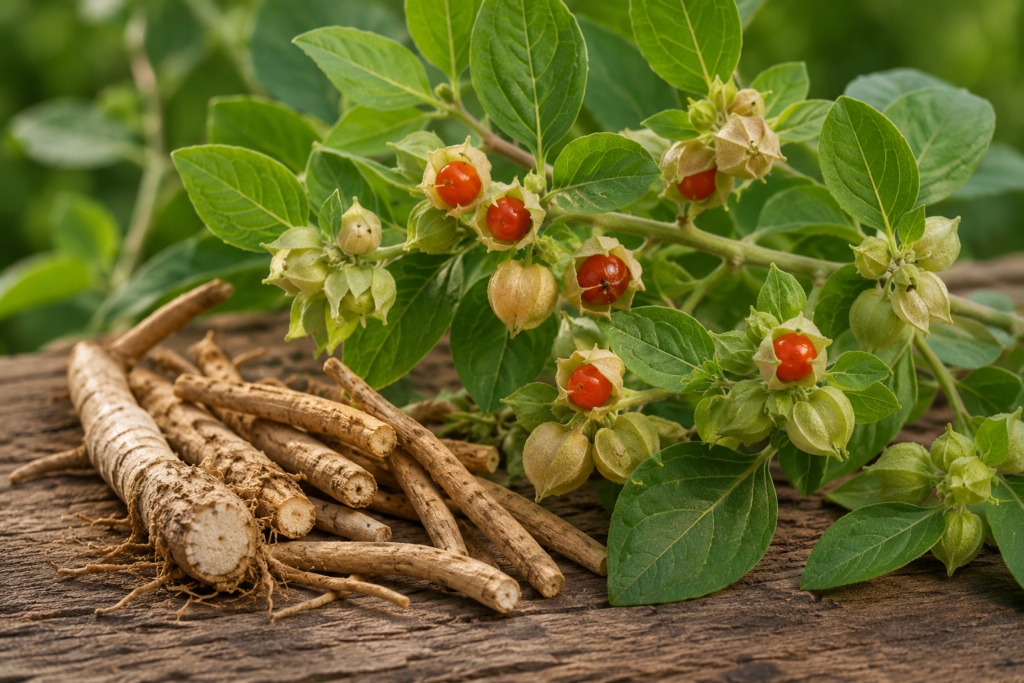
Ashwagandha: What Quality Actually Looks Like
Ashwagandha is an herbal extract, which means quality control varies a lot more between brands than it does for something like magnesium.
Standardized Extracts and Withanolide Content
Look for a named, standardized extract — KSM-66 and Sensoril are the two most studied. A label that just says “ashwagandha root powder” with no extract name or withanolide percentage listed is harder to trust, since potency isn’t standardized.
A (2021 meta-analysis in Sleep Medicine) pooling 5 trials and around 400 participants found the clearest benefit at doses of 600mg or more, taken for at least 8 weeks — shorter courses or lower doses showed weaker results.
Third-Party Testing
Since ashwagandha is a root extract, heavy metal contamination is a legitimate concern. A named third-party lab on the label — Eurofins is a common one — is a reasonable signal that the product has actually been tested, not just marketed as “pure.”
One caveat worth knowing: that same meta-analysis noted that long-term data in perimenopausal and postmenopausal women are still limited, so it’s worth paying attention to how your body responds.
What I Personally Use
Between the two standardized extracts, I’ve used both. NOW Foods KSM-66 Ashwagandha (600mg) and Doctor’s Best Sensoril Ashwagandha (250mg) are the two I’d point to — both list the extract name clearly on the label instead of just “ashwagandha root powder.”

Tart Cherry: What to Check Before You Buy
Tart cherry had some of the more consistent research behind it, but the format and sourcing details matter more here than with most supplements.
Most of the supporting research used the Montmorency variety specifically, which has notably higher melatonin content than other tart cherry types — so variety is worth confirming on the label rather than assuming “tart cherry” is interchangeable across brands.
For juice, NFC (Not From Concentrate) processing skips the high-heat concentration step, which preserves more of the heat-sensitive compounds. For capsules, freeze-dried extracts tend to retain more of the original nutrient profile than heat-dried versions. Either way, check the ingredient list for added sugar, high-fructose corn syrup, or artificial sweeteners — common additions in cherry juice blends that dilute the actual dose.
A( 2025 systematic review) found generally positive results across the available trials, though it was upfront that sample sizes remain small and longer studies are still needed.
I haven’t tried this one myself yet, so I’m not naming a specific product here — just the criteria I’ll be using when I do.
Melatonin: If You Use It, Use It Carefully
Melatonin is the one supplement on this list where dosing really matters, and where “more is better” tends to backfire.
Most clinical research uses doses between 2–5mg, and the UK’s NHS guidance points to 2mg for extended-release formulas — yet many over-the-counter bottles default to 10mg, which is higher than what most studies even test. Higher doses are also more associated with next-day grogginess and vivid dreams.
There’s also a longer-term consideration worth knowing about. A large observational study — following more than 130,000 people for over a year —reported an association between long-term melatonin use and changes in a biomarker associated with heart failure, presented through the (American Heart Association). This doesn’t establish that melatonin causes heart problems — it’s an association, not proof of cause and effect, and there’s no dose-response trial yet to confirm whether higher doses carry more risk. To be clear, this isn’t a reason to panic — most guidelines still consider short-to-moderate-term, low-dose melatonin safe under medical guidance. But it’s a reasonable argument for starting low and not treating it as a supplement to stay on indefinitely without reassessing.
L-Theanine: What the Evidence Does (and Doesn’t) Support
L-theanine is worth mentioning mainly because it’s popular, not because the sleep-specific evidence is especially strong yet.
Most available research uses doses in the 200–400mg range, and the working theory is that it increases alpha wave activity in the brain, creating a calmer, more relaxed state without sedation. The evidence base here is still thin — mostly a handful of small trials pulled together in review papers, rather than large standalone studies. It’s a low-risk supplement to experiment with, just not one to expect dramatic results from based on the current research.
One thing worth checking on the label: some products use patented, clinically-studied extracts like Suntheanine or AlphaWave, made through a specific enzymatic fermentation or purification process. Others just list “L-theanine” with a purity percentage and no named process behind it.
What I Personally Use
If you want the extra assurance of a clinically-studied form, look for a patented extract on the label — that’s the ingredient behind most of the human trials this section is based on. Doctor’s Best L-Theanine (150mg, with Suntheanine) is the one I’d point to here.
If you’re prioritizing value, L-theanine doesn’t strictly need to come from a patented extract to work — a high-purity (99%+) standalone product is a reasonable middle ground, just without the same clinical backing behind the specific extraction process.
A Quick Sleep Supplement Buying Guide Checklist
| Supplement | What to Check | Red Flag |
|---|---|---|
| Magnesium | Elemental magnesium amount, not just total compound weight | Total weight too low for the elemental amount claimed |
| Ashwagandha | Named extract (KSM-66, Sensoril) + withanolide % | No extract name, no third-party lab listed |
| Tart Cherry | Montmorency variety, NFC juice or freeze-dried capsules | Added sugar or “cherry flavor” without real fruit content |
| Melatonin | Dose between 1–3mg | Default 10mg bottles with no lower-dose option |
| L-Theanine | Purity % listed, or a named patented extract | Vague “L-theanine complex” with no numbers |
If you want the full story of how I landed on this list — including what worked, what didn’t, and why I dropped melatonin — The 3 A.M. Wake-Ups Started Right After My 47th Birthday — Here’s What I Tried covers that in more detail. For the bigger picture on midlife sleep beyond supplements, Sleep After 40: The Complete Guide to Cracking the Midlife Sleep Code is the place to start.
Common Questions
Is a higher dose always better for sleep supplements?
No, and melatonin is the clearest example — doses above what’s actually studied (2–5mg) are linked to more grogginess and vivid dreams, not better results.
How do I know if a magnesium supplement has enough elemental magnesium?
Check the label for “elemental magnesium” listed separately from the compound name. If it’s not listed, you can estimate it using the form’s known percentage — for glycinate, that’s roughly 14%, though this can vary somewhat by formulation.
Do I need third-party testing for every supplement, or just herbal ones?
Third-party testing matters most for herbal extracts like ashwagandha, where contamination and potency vary more between brands. It’s a good habit generally, but it’s less critical for something like magnesium, which is a defined mineral compound.
Is tart cherry juice as effective as capsules?
Both can work, but juice quality varies a lot more — look for NFC processing and no added sugar. Capsules are more consistent in dose but check that they’re freeze-dried rather than heat-dried.
This article is based on personal research and publicly available studies. It isn’t a substitute for medical advice. Please consult a healthcare professional before starting any new supplement, especially if you take other medications.