
It Started Right After I Turned 47
Not long after my 47th birthday, I started waking up at almost exactly 3 a.m. every night.
At first I brushed it off. But the next-day fatigue kept piling up, and I couldn’t ignore it anymore. When something’s off with my body, I tend to go down a research rabbit hole until I understand it — so that’s what I did. It occurred to me this might be one of those classic perimenopause symptoms midlife-women-supplements-guide early morning waking.
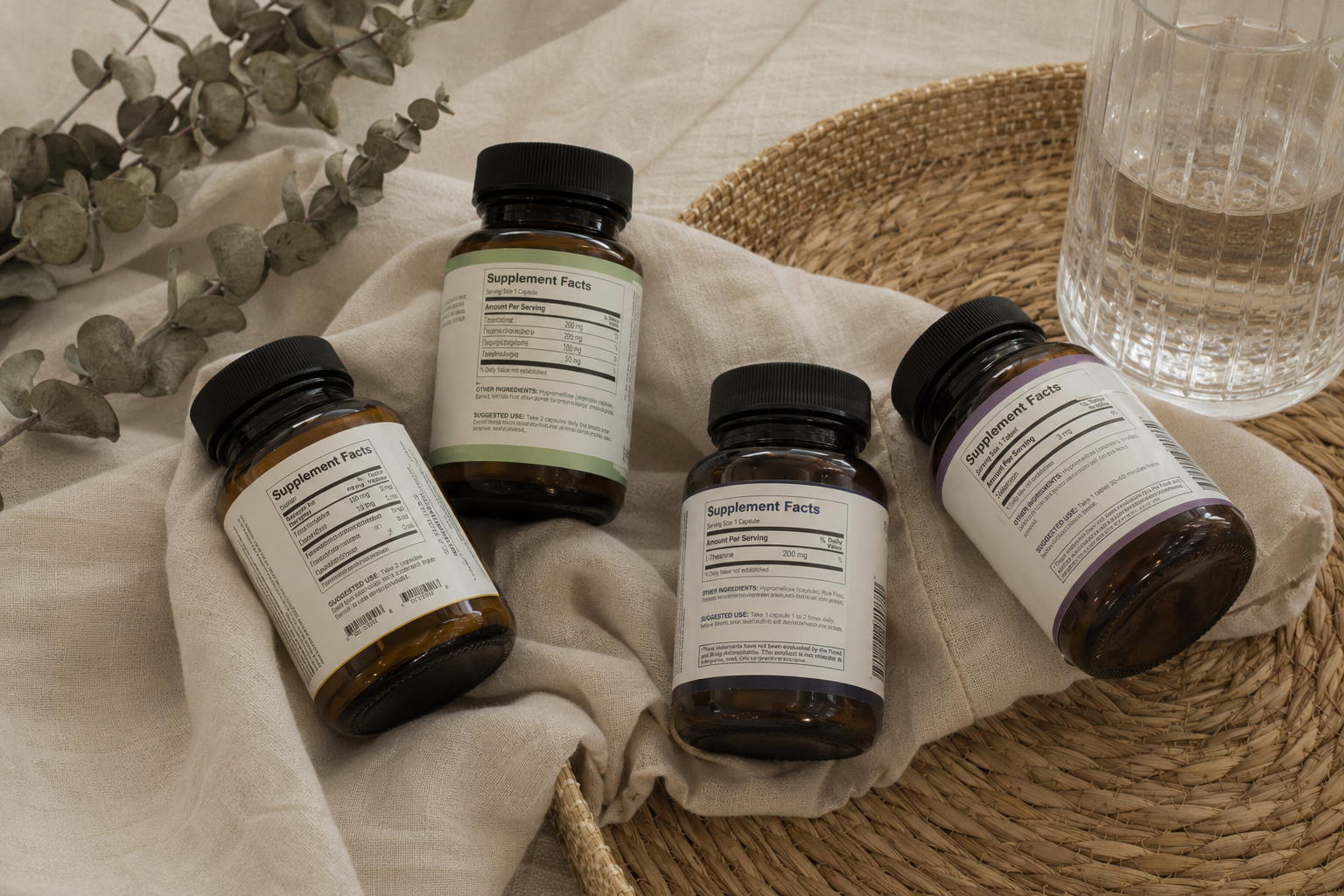
So I started working my way through sleep supplements after 40 that are supposed to help.
The Sleep Supplements After 40 I Actually Tried
L-Theanine and Melatonin
I started with the two most talked-about options: L-theanine and melatonin.
L-theanine came first. The 3 a.m. waking felt gentler somehow, and I seemed to wake up more refreshed in the morning. I honestly still don’t fully understand the mechanism behind that — it’s something I want to dig into more.
Melatonin came next, and in hindsight, I should have done more homework before starting. I just grabbed the most common dose on the shelf — 10mg — and it did not agree with me. I felt groggy well into the morning, and some nights brought genuinely unpleasant dreams.
I later learned that much smaller doses, often just 1–2mg, can be just as effective. I lowered the dose and moved my timing to three hours before bed, but the occasional bad dream persisted, so I eventually gave it up entirely. That said, it did noticeably cut down how often I was waking at 3 a.m. in the first place.
Magnesium
Magnesium came next, and honestly, the sheer number of forms out there was overwhelming. I started with magnesium citrate, the easiest to find — but it gave me diarrhea, so that was a short experiment. Switching to magnesium glycinate solved that problem completely.
At one tablet (100mg), I barely noticed a difference. It wasn’t until I moved up to two tablets (200mg) that I actually felt something shift. There’s a lot more to say about the different forms of magnesium and how dosage plays into it — enough that I’m planning to cover it properly in its own post.
Ashwagandha
The waking itself was hard, but the wave of anxiety that came with it was honestly worse. So I added ashwagandha into the mix, since it’s known for supporting stress relief and deeper sleep.
With herbal supplements like this, I’ve learned it matters to check for third-party testing that verifies purity and screens for heavy metals — so I made a point of choosing a product that met that bar. I’ll go into more detail on dosing and how to choose a quality ashwagandha product in a future post.
What the Research Actually Says
Feeling like something helped isn’t quite the same as knowing it works, so I went looking for the actual research behind these sleep supplements after 40.
The quality of evidence varied a lot, so here’s how it broke down, ingredient by ingredient.
Magnesium
Randomized, double-blind, placebo-controlled trials in healthy adults and people with sleep difficulties have reported improvements in sleep latency and sleep efficiency. But the studies tend to be small, and the results aren’t fully consistent.
I specifically looked for research directly comparing citrate and glycinate forms for sleep, and couldn’t find anything conclusive — so I want to be clear that glycinate working better for me is purely personal experience, not something backed by head-to-head research.
Melatonin
The melatonin research told a different kind of story. An observational study following more than 130,000 people with insomnia found that those who took melatonin for a year or longer had a higher rate of heart failure and related hospitalizations compared to those who didn’t.
This is an observational study, not one that proves cause and effect, so it doesn’t mean melatonin causes heart failure. I also came across mentions of another observational study, based on repeat prescription records, showing a similar signal for heart failure risk and overall mortality — though I couldn’t confirm a solid source for that one, so take it as a secondhand data point rather than something I’m standing behind fully. Either way, it made me think long-term use deserves some real caution.
Tart Cherry
I never actually tried tart cherry myself, but the evidence for it turned out to be relatively solid. A double-blind, placebo-controlled crossover trial in 20 healthy adults found that seven days of concentrated tart cherry juice increased total sleep time and time in bed, and improved sleep efficiency. (Study: Howatson et al., tart cherry juice and melatonin/sleep quality · Korean coverage of the same findings)
There’s also a smaller pilot study in older adults with insomnia reporting similar improvements, though I couldn’t track down a version of it I felt confident linking to — so I’m mentioning it here with that caveat.
L-Theanine
This is where my personal experience and the research diverged. There aren’t many sleep studies on L-theanine as a standalone ingredient — most of what I found tested it as part of a combination formula.
One placebo-controlled trial I came across reported worse objective sleep efficiency and total sleep time compared to placebo, and another found no meaningful difference from placebo on measures like the PSQI or wake time after sleep onset — though I couldn’t pin down reliable sources for either one, so I’d take both with a grain of salt. So that “waking up refreshed” feeling I had is really just my own experience — the standalone evidence for L-theanine improving early waking or sleep quality isn’t strong.
Ashwagandha
Of everything I looked into, ashwagandha had the most consistent evidence. A double-blind, placebo-controlled trial in people with insomnia and anxiety found that root extract improved sleep latency, sleep efficiency, PSQI scores, and anxiety scores. (Systematic review and meta-analysis of ashwagandha and sleep, 5 RCTs)
Another double-blind study in healthy adults who complained of unrefreshing sleep found improvements in sleep efficiency, total sleep time, sleep latency, and wake time after six weeks — with no dropouts due to side effects. (Study: Langade et al., ashwagandha root extract in healthy volunteers and insomnia patients)
Taken together, ashwagandha and tart cherry had the most consistent evidence, while magnesium and L-theanine had more limited or mixed results. Melatonin came with a real signal worth being cautious about for long-term use.
What I Took Away From the Research
Honestly, after going through all of this, the thing that stood out most was that not one of these sleep supplements after 40 could honestly be called a guaranteed fix. Even where evidence existed, it usually came from small trials, narrow conditions, or combination formulas rather than the single ingredient on its own.
And just because something worked for me doesn’t mean it’ll work the same way for you. I felt a real difference with L-theanine, but the research backing it up was thin.
Ashwagandha, on the other hand, had solid research behind it — but for me, it helped more with anxiety than with dramatic changes in sleep itself. It reconfirmed something I already suspected: finding what works for your body really is a personal process.
Melatonin was the one that gave me the most pause. It helped short-term with the early waking, but once I saw the long-term safety signal, I didn’t feel comfortable continuing it.
What I’m Doing Now
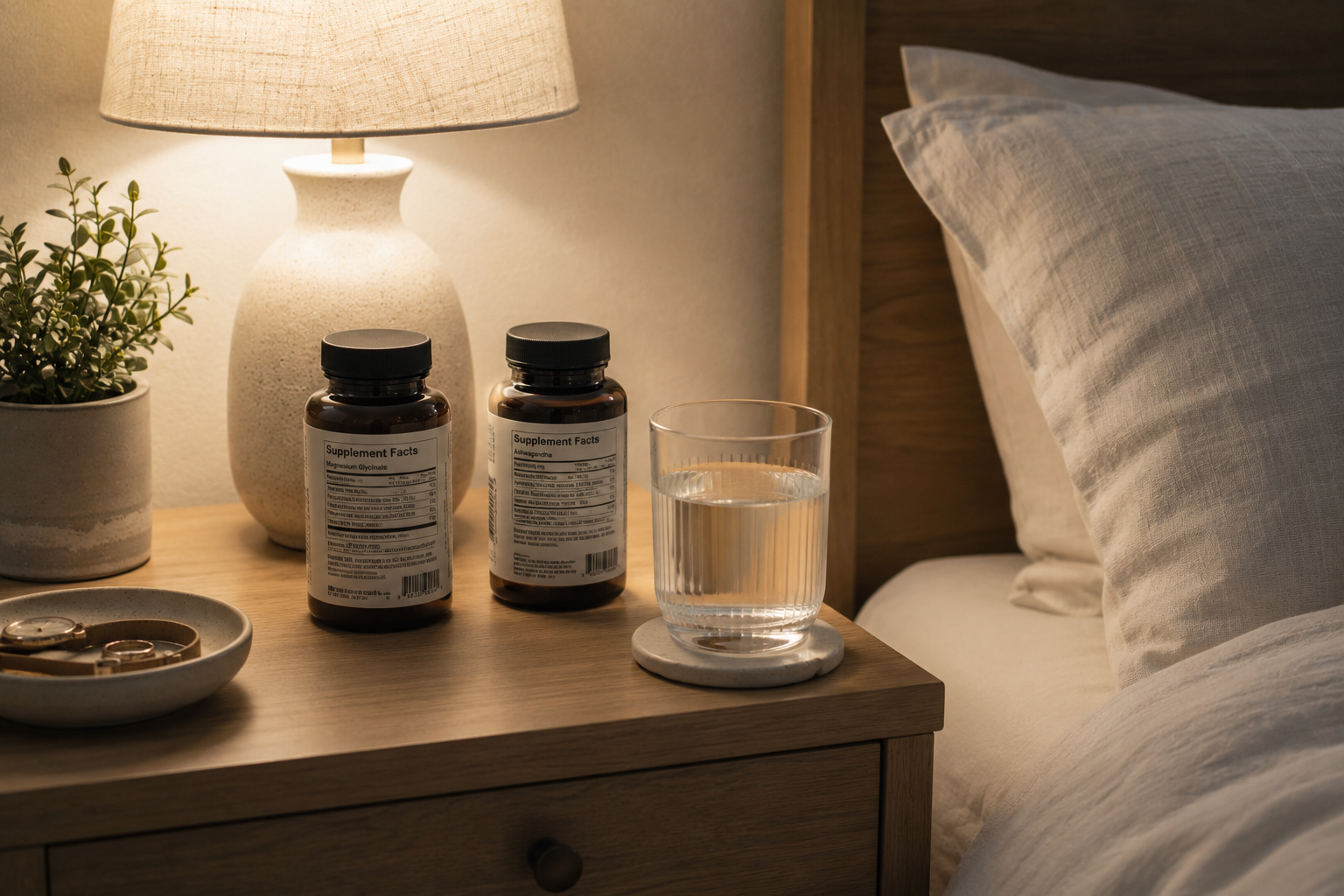
Right now, I’m sticking with about 200mg of magnesium glycinate, and adding third-party-tested ashwagandha on days when anxiety is running high. I’ve stopped melatonin, and I only reach for L-theanine occasionally, depending on how I’m feeling. This is the combination that works for me — not a formula I’d claim is right for everyone.
Who This Might Be Useful For
If you’re looking into sleep supplements after 40, this list might sound familiar:
- Anyone in their late 40s or beyond who’s started waking up in the early hours like I did
- Anyone who wants to try gentler options before turning to sleep medication
- Anyone who cares about checking ingredient form, dosage, and third-party certification before buying a supplement
If sleep trouble sticks around for a long time or is seriously disrupting your daily life, though, I’d say talk to a doctor first rather than trying to solve it with supplements alone.
If you’re curious about supplements for midlife more broadly — not just sleep — I’ve put together a full guide to supplements for midlife women covering everything I’ve looked into so far.
Common Questions
A few things people usually ask me about sleep supplements after 40:
Is magnesium citrate or glycinate better for sleep?
As I mentioned above, I couldn’t find sleep research directly comparing the two forms. Glycinate simply agreed with my digestion better — that’s the whole reason behind my preference, not a research-backed conclusion.
What’s a reasonable melatonin dose?
Some research suggests low doses — around 1–2mg — can be effective. But since people respond differently and there’s a safety signal around long-term use, it’s worth being thoughtful about dose and duration before you start.
What should I look for when choosing an ashwagandha supplement?
Since it’s an herbal supplement, I’d say the most important thing is checking for third-party testing that confirms purity and screens for heavy metals. I’ll cover specific product criteria in more detail in an upcoming post.
Does L-theanine actually help with early morning waking?
I personally felt like it helped, but the standalone research isn’t strong enough for me to confidently recommend it just because it worked for me.
Keep Reading:Sleep After 40: The Complete Guide to What Actually Helps.
This article is based on personal experience and publicly available research. It is not a substitute for medical diagnosis or treatment. Please consult a healthcare professional regarding any health concerns or supplement use.