
Somewhere after forty, my body started feeling different. At first I just chalked it up to being tired. But then the sleepless nights piled up, I found myself snapping over nothing, hot flashes came out of nowhere, and my joints ached in a way they never had after a workout.
On their own, none of it seemed like a big deal. But once I stepped back and looked at the whole picture, there was a pattern. This was perimenopause.
Brain fog, insomnia, joint pain, digestive issues, mood swings, irregular cycles, hot flashes and night sweats, a racing heart out of nowhere, and weight changes — I’ve experienced almost everything on that list, to varying degrees. That’s when I started being more intentional about supplements for midlife women.
In the beginning, I just tried whatever sounded promising. Some things worked, some didn’t. This is a record of that process — what I tried, what actually helped, and what flopped.
Everything here is grounded in actual research, not marketing copy. But there’s often a gap between what studies show and what I personally experienced, and I want to be honest about both.
Table of Contents
Brain Fog
On any day my sleep was bad, the fog showed up without fail. The most frustrating part was losing words mid-sentence — driving, or in the middle of a conversation, a word I absolutely knew would just disappear.
The connection to sleep was obvious. The worse I slept, the more often it happened. So beyond fixing my sleep, I started leaning harder into exercise too — moving my body genuinely seemed to clear my head.
Keep Reading: what actually helped with brain fog
Sleep
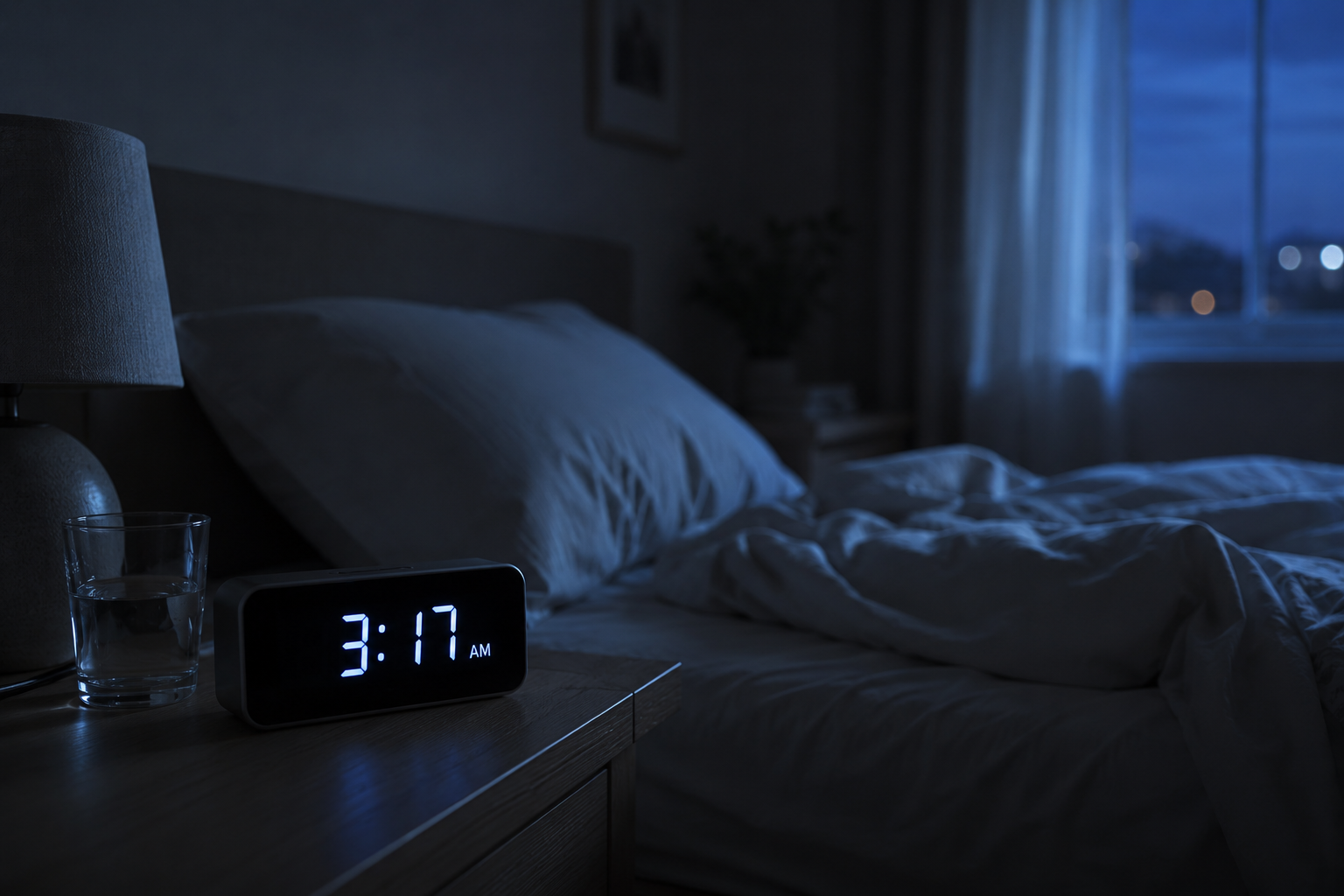
Sleep was the first thing to fall apart. Falling asleep was never really the problem — staying asleep was. Almost every night, I’d wake up around 3 a.m. No alarm, just my eyes snapping open at the exact same time.
On the nights I didn’t sleep well, it showed. A wave of anxiety would hit over nothing in particular, and brain fog would roll in right alongside it. That’s when it really hit me how tightly sleep, anxiety, and cognitive function are tangled together.
I tried a handful of things. Magnesium was where I started, though I quickly realized there are several different forms and picking the right one wasn’t obvious at all. Magnesium was the first thing that made a noticeable difference, and I’m currently also trying tart cherry alongside it to compare.
Keep Reading : what worked for my 3am wake-ups
Joint Pain
It hasn’t gotten bad enough to disrupt daily life, but the change is real. My ankles used to ache after running, and a day of rest used to fix it completely. Lately, that’s not enough anymore.
Pull-ups were similar. The day after, my wrists would bother me in a way they never used to. Same workouts, same intensity — but the recovery time and the kind of pain were different. That’s when it clicked that this wasn’t just regular muscle soreness. Something else was shifting.
For now, I’ve scaled back my running and paused pull-ups altogether. Rather than push through it, I decided to listen to what my body was telling me first.
Keep Reading : my joint pain routine after 40

Gut Health
Digestive issues showed up around the same time as everything else. My bowel movements weren’t what they used to be, so I started digging — and even got a colonoscopy just in case. Nothing showed up. Which was almost more frustrating, honestly, because the tests said everything was fine but my body clearly disagreed.
That’s when I started researching in earnest, and that’s also how I first learned about SIBO. I’ve tried more or less every gut-related supplement on the market at this point — DGL, mastic gum, berberine, L-carnosine, cabbage extract. I worked through them one by one and tracked what actually made a difference.
Keep Reading:how I approached my gut health
Mood and Stress
I noticed the irritability most when dealing with my kid’s teenage moods. Things I would’ve shrugged off before suddenly had no margin for patience, and I caught myself meeting attitude with attitude more often than I’d like to admit. Logically I know my kid is going through their own hard stretch — but my emotions reacted before my brain caught up.
I haven’t tried any supplement specifically for this yet. But learning that this might not just be “me getting more sensitive” — that it could be tangled up with hormonal shifts — has shifted me away from self-blame and toward actually trying to understand what’s going on.
Keep Reading : managing mood swings and stress
Hormone Balance
The first sign was my cycle going haywire. Night sweats followed soon after — a sudden wave of heat right before bed, to the point where I genuinely cannot fall asleep without a fan running anymore. Regardless of season, a fan by the bed is just part of my routine now.
The first things I tried for hormone balance were indole-3-carbinol and lignans, both of which I’d read were connected to estrogen metabolism. From there I gradually added calcium D-glucarate, pycnogenol, and omega-3s, trying each one in turn.
Keep Reading : supplements for hormone balance
What I’ve Learned
Food vs. Supplement
I didn’t try to solve everything with a pill. Instead of a DIM supplement, I started eating more cruciferous vegetables — broccoli, cabbage, napa cabbage, kale. They’re easy to find, and I get fiber on top of everything else, so it felt like I was getting more out of real food than out of a single capsule. For the same reason, I switched from nattokinase supplements to just eating natto.
I started blending it all into smoothies, which made it easy to keep up — and there was an unexpected bonus: my digestion got noticeably easier. Supplements are convenient, no question. But whenever real food is a realistic option, it wins for me.
Can You Take These Together?
Once you’re juggling several supplements, the obvious questions start coming up — can I take these two together, does combining them actually work better? Magnesium with vitamin D, creatine with protein, omega-3 with vitamin E are combinations I’ve actually tried. Combos with known absorption competition, like iron and calcium, I deliberately took at separate times.
Supplements I Stopped Taking
If something sounded good, came up in an ad, or seemed to be trending, I was usually curious enough to try it. Collagen and NMN were the big ones. I took both consistently for a while, and honestly didn’t notice any real difference once I stopped.
Thinking it over, I don’t think that means they don’t work — I think they’re just not the kind of supplement you feel right away. These days I try to separate “things I can feel” from “things I can’t feel but that might still matter.”
How to Use This Supplements for Midlife Women Guide
Each section above links to a deeper, standalone article. If there’s one symptom you’re most curious about right now, start there — or work through everything from the top. This guide will keep updating as new articles go up.
Supplements aren’t a magic fix. But chosen carefully, with real information behind them, they can genuinely help. I’m still figuring out that balance myself, and I’d love to figure it out alongside you.
You Might Be Wondering
Is it safe to take multiple supplements at once?
That’s exactly why I looked into combinations and timing rather than just throwing everything together. Some combos compete for absorption, some are fine together, and some work better paired up. Start with one or two things at a time so you can actually tell what’s doing what.
How long before you noticed any changes?
It really depended on the supplement. Magnesium for sleep was noticeable within a week or two. Hormone-balance supplements took much longer — and honestly some of them I still can’t say for certain are “working.” I just haven’t stopped taking them yet.
Did you talk to a doctor before starting these?
I did get bloodwork done and talked to my doctor about a few specific things, especially anything hormone-related. But a lot of this list started as my own research first. I’d genuinely encourage anyone to check with their doctor before starting something new.
What if I try something and don’t notice any difference?
That happened to me with collagen and NMN. “No noticeable effect” doesn’t always mean “not doing anything” — some supplements work on a slower timeline. But if it’s not in your budget and you can’t tell it’s helping, it’s completely fair to stop.
Do I need to try all of these, or just the ones that apply to me?
Just the ones that apply to you. I didn’t start all nine at once — they came up one at a time as different symptoms showed up. Start with whatever’s bothering you most right now.
This article is based on personal experience and publicly available research. It isn’t a substitute for medical diagnosis or treatment. If you’re considering any new supplement, please talk to a healthcare provider first. For general information on menopause and dietary supplements, the NIH Office of Dietary Supplements is a reliable starting point.